Flexographic printing machines are industrial printing systems that use flexible relief plates to transfer ink onto a wide range of materials.
The process is commonly known as flexography, or flexo printing. It is widely associated with packaging because it can print on paper, paperboard, plastic films, labels, corrugated materials, and other flexible substrates.
The basic process uses a raised image on a flexible printing plate. An anilox roller controls the amount of ink transferred to the plate, while impression cylinders apply pressure so that the image reaches the substrate. Modern systems can include several printing units, drying or curing systems, registration controls, inspection equipment, and automated settings.
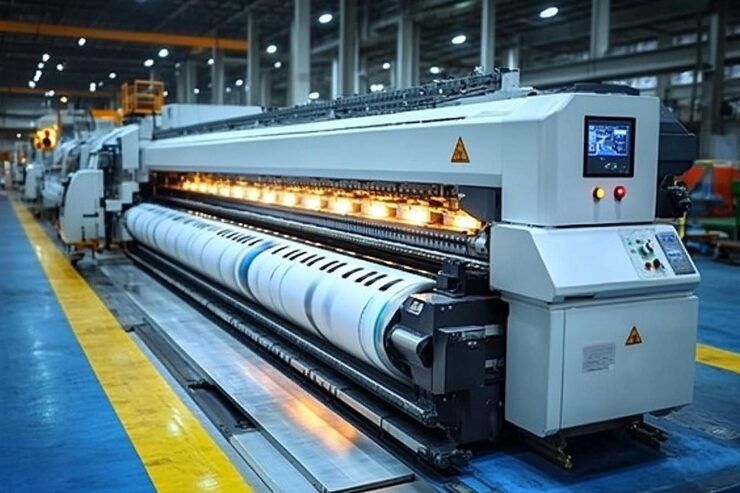
Flexographic printing machines are available in different configurations. Common arrangements include central impression (CI), inline, and stack presses. The appropriate configuration depends on the substrate, printing requirements, number of colors, production format, and downstream converting processes.
| Machine Type | Common Characteristics | Typical Applications |
|---|---|---|
| Central Impression | Several printing units around one impression cylinder | Flexible packaging, films, bags |
| Inline | Printing units arranged in sequence | Labels, cartons, paper products |
| Stack | Printing units positioned vertically | Flexible materials, bags, specialty packaging |
| Narrow-Web Flexo | Smaller web width and detailed registration | Labels and smaller-format packaging |
| Wide-Web Flexo | Larger web width and multiple-color production | Flexible packaging and industrial applications |
Why Flexographic Printing Matters
Packaging manufacturers and converters use flexography because the process can accommodate many substrates and production formats. Its flexibility is particularly important in industries where packaging must combine graphics, product information, branding, and functional features.
Food and beverage packaging represents an important application area, along with pharmaceutical packaging, personal-care products, household goods, labels, corrugated packaging, and industrial packaging.
A modern flexographic printing machine can integrate several functions into one production line. These may include printing, drying, coating, laminating, slitting, or other converting operations. Integration can reduce the number of separate production stages and help maintain consistent registration between processes.
Key areas where flexographic technology is relevant include:
- High-volume packaging production
- Flexible packaging and film printing
- Corrugated board printing
- Pressure-sensitive and other labels
- Paper bags and sacks
- Folding cartons and paper-based packaging
- Specialty coatings and functional printing
The technology also helps address practical production challenges. Automated registration systems can compensate for variations during printing, while computerized controls can help operators maintain consistent settings. Modern inspection systems can identify defects while a production run is underway rather than relying entirely on manual inspection.
Major Components of a Flexographic Printing Machine
A flexographic press contains several interconnected systems. Each component influences print quality, consistency, and operating performance.
Printing plates: Flexible photopolymer or other plate materials carry the raised image that transfers ink to the substrate.
Anilox roller: The anilox roller meters ink using a pattern of engraved cells. Its specifications influence ink volume and color density.
Doctor blade system: Doctor blades remove excess ink from the anilox surface, supporting controlled ink transfer.
Impression cylinder: This cylinder applies the required pressure between the substrate and printing plate.
Ink system: Depending on the application, the press may use water-based, solvent-based, or UV-curable ink systems.
Drying and curing: Drying systems remove liquid components from ink, while curing systems such as UV technology use energy to harden suitable inks.
Web tension controls: These systems regulate substrate tension as the material travels through the press.
Registration controls: Sensors and automated controls help align multiple colors accurately.
Inspection systems: Cameras and software can monitor print quality and identify defects, missing areas, registration problems, or color variations.
Technology Trends in 2025 and 2026
Recent developments in flexographic printing have focused on automation, sustainability, process control, and compatibility with changing packaging materials.
Industry discussions during 2026 have increasingly emphasized automated workflows, real-time quality monitoring, expanded color gamut printing, hybrid production, and improved handling of recyclable substrates. Industry predictions for 2026 also identify artificial intelligence, predictive maintenance, automated plate production, and automated quality control as areas receiving greater attention.
In June 2026, a Flexo Forward conference in Ahmedabad highlighted productivity, process simplification, sustainability, and more predictable flexographic production as important industry themes in India.
In August 2026, Esko and DuPont announced the launch of the Quartz ecosystem in North India, reflecting continued development of digitalized prepress and flexographic workflows for the South Asian packaging sector.
Another significant development is the growing focus on recycled and recyclable packaging structures. Research and demonstrations in 2026 have examined how flexographic printing can maintain print performance on post-consumer recycled materials and newer packaging structures.
The main technology trends can be summarized as follows:
| Trend | Purpose |
|---|---|
| Automated registration | Improve color alignment |
| AI-assisted inspection | Detect defects and process variation |
| Digital plate production | Improve consistency and workflow control |
| Expanded Color Gamut | Reduce dependence on multiple spot colors |
| Water-based and UV-curable inks | Support different environmental and application requirements |
| Recyclable substrates | Adapt printing to changing packaging structures |
| Predictive maintenance | Identify potential equipment problems earlier |
| Hybrid flexo-digital systems | Combine conventional and digital capabilities |
Indian Laws, Standards, and Policies
In India, flexographic printing machines can be affected indirectly by regulations governing packaging materials, food safety, plastic waste, emissions, and waste management.
The Plastic Waste Management Rules are particularly relevant when flexographic presses are used for plastic packaging. The Plastic Waste Management (Amendment) Rules, 2024 were notified on March 14, 2024. The amendments strengthened digital reporting and expanded responsibilities connected with plastic packaging waste management and Extended Producer Responsibility (EPR).
For food packaging, the Food Safety and Standards Authority of India (FSSAI) provides requirements for packaging materials. Its packaging regulations state that materials used for food packaging must meet applicable requirements, and printing inks used on food packages must conform to IS 15495. The printed surface must also not come into direct contact with food.
FSSAI's packaging framework was amended on March 28, 2025, and additional packaging-related regulatory activity continued during 2026. In August 2026, FSSAI published a final Packaging Amendment Regulation concerning the inclusion of packaging materials for pan masala.
These requirements mean that machine configuration, ink selection, substrate selection, printing conditions, and quality-control procedures may need to be considered together, especially for food-contact packaging.
Tools and Resources for Flexographic Printing
Several technical resources can help readers understand equipment specifications, printing standards, packaging regulations, and process control.
- FSSAI: Useful for Indian food-packaging regulations and related notifications.
- Central Pollution Control Board (CPCB): Relevant for environmental compliance and plastic-waste management information.
- Bureau of Indian Standards (BIS): Useful for Indian Standards covering materials, inks, packaging, and related industrial practices.
- Flexographic Technical Association (FTA): Provides technical education, industry information, standards-related resources, and flexographic knowledge.
- Prepress workflow software: Used for plate preparation, color management, proofing, and production workflow.
- Color measurement instruments: Spectrophotometers and densitometers help evaluate color consistency.
- Web inspection systems: Camera-based systems monitor printed webs for defects during production.
- Anilox specification tools: Help determine appropriate line screens, cell volumes, and ink-transfer characteristics.
- Machine monitoring software: Can track production data, registration, downtime, and equipment conditions.
For organizations evaluating flexographic printing equipment in India, technical specifications should be considered alongside substrate compatibility, ink technology, printing width, color configuration, drying capacity, automation, registration control, and applicable regulatory requirements.
Frequently Asked Questions
What is a flexographic printing machine?
A flexographic printing machine is an industrial press that uses flexible relief printing plates to transfer ink onto substrates such as paper, plastic film, labels, corrugated board, and other packaging materials.
What materials can flexographic machines print on?
Flexographic presses can handle many substrates, including paper, paperboard, plastic films, labels, corrugated materials, and certain specialty materials. The exact substrate range depends on the press configuration and ink system.
What is the role of an anilox roller?
The anilox roller controls the quantity of ink transferred to the printing plate. Its engraved cells determine the volume of ink carried to the plate, making it an important component for color consistency and print control.
Are flexographic printing machines suitable for packaging?
Yes. Packaging is one of the major applications of flexographic printing. The technology is used for flexible packaging, labels, corrugated packaging, paper bags, cartons, and other packaging formats.
How is automation changing flexographic printing?
Automation is increasingly being used for registration, machine setup, inspection, data collection, plate workflows, and maintenance monitoring. These systems are intended to improve repeatability and reduce process variation while allowing operators to monitor more production parameters.
Conclusion
Flexographic printing machines remain an important technology for packaging and industrial printing because they can work with a broad range of substrates and production formats. Modern presses are moving beyond basic mechanical printing toward integrated systems involving automation, digital workflows, inspection, advanced color management, and improved process control.
Developments during 2025 and 2026 show that sustainability and automation are becoming closely connected with flexographic technology. Recyclable substrates, water-based and UV-curable ink technologies, automated inspection, predictive maintenance, and expanded color systems are influencing equipment development.