Road milling machines are specialized road construction machines designed to remove a controlled thickness of existing pavement.
They are commonly used when asphalt surfaces become uneven, cracked, rutted, damaged, or too high for a planned resurfacing layer.
A milling machine uses a rotating cutting drum fitted with numerous cutting tools. As the drum moves across the pavement, it removes the selected layer and produces reclaimed asphalt pavement (RAP). The removed material can then be transported, processed, or incorporated into suitable recycling processes.
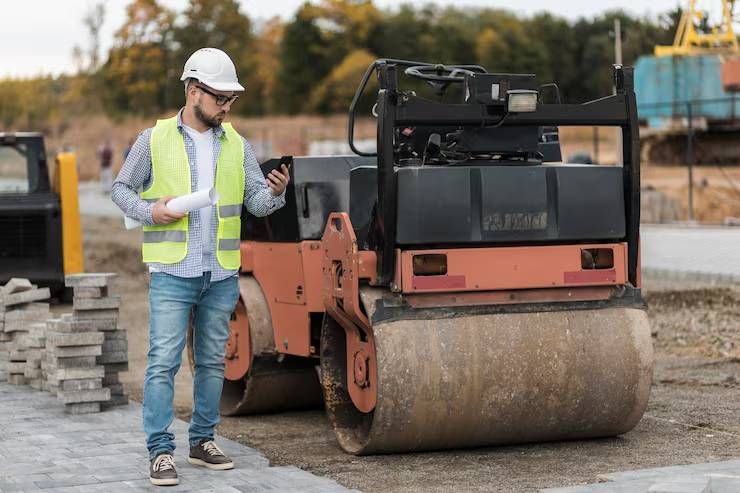
Road milling is different from complete road reconstruction. Instead of removing the entire pavement structure, milling can target a specific surface or structural layer. This makes it useful for pavement rehabilitation, profile correction, resurfacing preparation, and maintenance.
Modern cold milling machines are available in different sizes and configurations. Some are designed for large highway projects, while compact units can operate in restricted urban areas.
The main components generally include:
- Milling drum and cutting teeth
- Drum housing
- Conveyor system
- Hydraulic drive system
- Depth-control mechanism
- Water-spray or dust-control system
- Operator controls
- Machine guidance and monitoring systems
Why Road Milling Matters
Road pavement is exposed to traffic loads, weather, water, temperature changes, and repeated maintenance activities. Over time, these factors can produce rutting, surface deformation, cracking, and unevenness.
Road milling machines help address these problems by removing selected pavement material before a new layer is placed.
For highway authorities, contractors, pavement engineers, and road maintenance agencies, milling can support several important activities:
- Removing deteriorated asphalt
- Correcting pavement profiles
- Preparing surfaces for overlays
- Reducing excessive pavement elevation
- Removing localized damaged areas
- Improving the bond between old and new pavement
- Recovering reusable asphalt material
- Supporting pavement recycling
The quality of milling also affects the following construction stage. A consistent milling depth and properly cleaned surface can help create suitable conditions for an overlay. India's Ministry of Road Transport and Highways has specifically recognized cold milling as part of pavement rehabilitation and overlay practices.
Common Types of Road Milling Machines
Different milling machines are selected according to pavement condition, milling depth, road width, and project requirements.
| Machine type | Typical application | Main characteristic |
|---|---|---|
| Small milling machine | Urban roads and confined areas | Compact working width |
| Medium milling machine | General pavement rehabilitation | Balanced capacity and maneuverability |
| Large cold planer | Highways and major road projects | High production capability |
| Micro milling machine | Surface correction and texture improvement | Fine milling pattern |
| Half-lane milling machine | Lane rehabilitation | Designed for wider pavement removal |
| Full-lane milling machine | Large-scale pavement rehabilitation | Covers substantial pavement width |
The appropriate machine depends on the required milling depth, drum width, pavement material, site restrictions, and specified surface profile.
How the Milling Process Works
A typical road milling operation begins with a pavement assessment. Engineers determine the areas requiring removal and establish the required milling depth.
The machine is then positioned on the pavement and adjusted according to the specified grade. The cutting drum rotates while the machine moves forward, removing the pavement.
Material removed by the drum is generally collected through an integrated conveyor and transferred to a truck or other handling system.
Water may be applied around the milling drum to control dust and manage heat generated during cutting. After milling, the surface is cleaned so that loose material and dust do not interfere with the next pavement layer.
Important operating factors include:
- Milling depth
- Milling width
- Forward travel speed
- Drum rotation
- Cutting-tooth condition
- Pavement hardness
- Moisture and temperature
- Surface cleaning
- Machine guidance accuracy
Technology and Efficiency Trends
Road construction machinery is increasingly incorporating electronic controls, automated depth adjustment, machine guidance, digital monitoring, and data recording.
In June 2025, MoRTH issued a circular promoting Automated & Intelligent Machine-aided Construction for National Highway projects. The initiative emphasizes automatic machine-guided construction, digitized construction data, and improved adherence to design specifications.
Although the circular is broader than milling machines alone, the direction is relevant to pavement machinery because modern roadwork increasingly depends on controlled machine operation and measurable construction data.
Machine guidance can help operators maintain a specified milling depth and profile. Digital systems can also support quality documentation and project monitoring.
Road Milling and Asphalt Recycling
One of the important applications of pavement milling is the recovery of existing asphalt material.
The material removed during milling can become reclaimed asphalt pavement when it meets applicable specifications and is properly processed. RAP can potentially be used in pavement recycling systems instead of treating all removed material as waste.
MoRTH guidance has encouraged consideration of cold and hot pavement recycling, while IRC publications provide technical information on recycling bituminous pavement materials.
The Indian Roads Congress also published IRC:142-2025, Guidelines on Full Depth Recycling/Reclamation Technology for Pavements Using Cementitious Binders, reflecting continued attention to pavement recycling technologies.
In August 2025, IRC and the Uttar Pradesh Rural Roads Development Agency also held a seminar on full-depth recycling and green technologies in road construction in Lucknow.
These developments show a broader movement toward pavement rehabilitation methods that make greater use of existing road materials.
Recent Developments in India
Road milling technology is developing alongside wider changes in pavement rehabilitation and highway construction.
The Economic Survey 2024–25 reported that India's National Highway network had expanded to about 1.46 lakh km by 2024, compared with 91,287 km in 2014. It also reported substantial growth in four-lane-and-above National Highways.
For road milling equipment, a larger and increasingly upgraded highway network means continued attention to pavement maintenance, resurfacing, rehabilitation, and construction quality.
Another notable development is the increasing focus on recycling. IRC's recent publications and technical events have highlighted full-depth recycling, reclaimed materials, and lower-resource pavement technologies.
IRC's updated accreditation framework for new materials and techniques also became effective from April 1, 2026, providing a formal framework for evaluating new technologies, materials, equipment, and techniques intended for trial use.
Laws, Standards, and Government Policies
Road milling projects in India can be affected by several layers of technical specifications, environmental requirements, road authority instructions, and project-specific conditions.
For National Highway work, MoRTH Specifications for Road and Bridge Works are an important technical reference. Milling and pavement recycling provisions establish requirements for construction practices and material handling.
MoRTH's guidance on pavement rehabilitation recommends considering existing pavement rehabilitation, overlays, removal and replacement, cold recycling, and hot recycling according to project conditions.
Environmental considerations are also important. Construction and roadwork can generate dust, and the Central Pollution Control Board has identified road dust and construction dust management as areas requiring measures such as mechanical sweeping, dust suppression, and implementation of applicable construction and demolition requirements.
Road projects should therefore consider:
- MoRTH specifications
- Applicable Indian Roads Congress standards
- Project-specific technical specifications
- Environmental and dust-control requirements
- Proper handling of milled pavement material
- Traffic management requirements
- Worker and public safety measures
- State or local authority requirements
Helpful Tools and Resources
Several official resources can help engineers, students, project planners, and road construction professionals understand road milling and pavement rehabilitation.
| Resource | Useful for |
|---|---|
| MoRTH | National Highway specifications, circulars and technical guidelines |
| Indian Roads Congress | Pavement standards, recycling guidelines and technical publications |
| NHAI | National Highway project information and technical resources |
| CPCB | Environmental and dust-management information |
| Pavement thickness records | Determining appropriate milling depth |
| Machine depth-control systems | Maintaining specified milling levels |
| Pavement condition surveys | Identifying damaged or unsuitable pavement |
| RAP testing procedures | Assessing reclaimed asphalt characteristics |
The IRC website is particularly useful for following new and revised road engineering publications. Its 2025 publications included guidance related to full-depth recycling, while its 2026 resources include updated material and technology accreditation information.
Frequently Asked Questions
What is a road milling machine used for?
A road milling machine removes a controlled thickness of existing pavement. It is commonly used for resurfacing preparation, pavement rehabilitation, profile correction, removal of damaged asphalt, and material recovery.
What is cold milling?
Cold milling is the mechanical removal of pavement using a rotating cutting drum without heating the pavement before cutting. The process can remove a specified depth of asphalt and create a prepared surface for subsequent pavement work.
What happens to material removed by a milling machine?
Milled asphalt may be transported for processing and potential use as reclaimed asphalt pavement when it meets applicable technical requirements. Its handling and reuse depend on material quality, project specifications, and recycling procedures.
How is milling depth controlled?
Milling depth can be controlled through mechanical or electronic systems. Modern machines may use automatic grade and slope controls to help maintain the specified profile.
Is milling suitable for every damaged road?
No. Milling is not appropriate for every pavement problem. Engineers need to assess pavement structure, damage depth, drainage, base conditions, material properties, and the intended rehabilitation treatment before selecting a milling approach.
Conclusion
Road milling machines are an important part of modern pavement rehabilitation and road construction. By removing selected pavement layers with controlled depth and profile, they can prepare roads for resurfacing, correct surface irregularities, and recover existing asphalt materials.
Their role is becoming increasingly connected with pavement recycling, digital machine control, construction quality monitoring, and resource-efficient rehabilitation. Recent Indian developments, including IRC's work on full-depth recycling and MoRTH's emphasis on automated and intelligent construction, indicate a broader movement toward more controlled and technology-driven road infrastructure.
For effective road milling, machine selection alone is not enough. Pavement assessment, accurate depth control, surface cleaning, material management, dust control, and compliance with applicable technical standards all contribute to the quality of the finished road.