Amethyst jewellery features a purple variety of quartz used in rings, necklaces, earrings, bracelets, pendants, and other decorative accessories.
Its colour ranges from pale lavender to deep violet, making it recognizable among coloured gemstones. Amethyst has been used in jewellery for centuries and remains relevant in traditional ornaments as well as contemporary designs.
Amethyst is a naturally occurring mineral formed through geological processes. Its purple colour is associated mainly with trace iron and natural irradiation within the crystal structure. Gemstone colour can vary according to the stone’s formation conditions, and individual pieces may display different shades, transparency levels, and internal patterns.
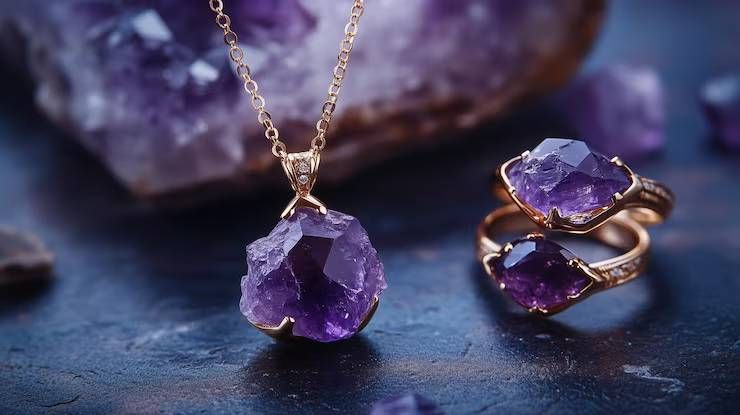
The gemstone is generally suitable for everyday jewellery when properly set and handled. It has a Mohs hardness of 7, which means it resists ordinary scratching better than many softer decorative materials. However, it can still chip or fracture if struck against a hard surface.
Amethyst jewellery is available in several forms, including faceted gemstones, polished cabochons, beads, and carved pieces. Faceted stones have multiple flat surfaces designed to reflect light, while cabochons have smooth, rounded surfaces that emphasize colour and natural patterns.
Importance of Amethyst Jewellery
Colour and Visual Appeal
Purple is the defining characteristic of amethyst, although its intensity varies from one gemstone to another. Pale lavender stones often create a subtle appearance, while darker violet stones can provide stronger colour contrast.
The gemstone pairs with metals such as sterling silver, yellow gold, white gold, and platinum. Silver settings can create a cool-toned appearance, whereas yellow gold introduces a warmer contrast. The final effect depends on the gemstone’s shade, cut, size, and surrounding design.
Cultural and Historical Significance
Amethyst has appeared in jewellery and decorative objects across different historical periods. Ancient cultures associated the gemstone with ideas such as clarity, restraint, and protection. Its name comes from a Greek term historically connected with the belief that the stone could prevent intoxication.
These associations belong to cultural history rather than established scientific evidence. Today, amethyst continues to appear in personal ornaments, traditional jewellery, and symbolic gifts.
Variety of Jewellery Designs
Amethyst can be shaped into different cuts and forms, allowing designers to create both simple and elaborate pieces. Small stones may be arranged in clusters, while a single larger gemstone can serve as the centrepiece of a ring or pendant.
Common design options include:
- Solitaire rings featuring one prominent amethyst.
- Cluster earrings containing several small purple stones.
- Pendant necklaces with oval, pear-shaped, or round gemstones.
- Beaded bracelets made with polished amethyst pieces.
- Vintage-inspired ornaments with decorative metalwork.
- Modern geometric designs featuring clean lines and minimal settings.
This variety makes amethyst suitable for casual accessories, formal occasions, and traditional jewellery collections.
Birthstone and Gift Traditions
Amethyst is widely recognized as the birthstone for February. It is often included in birthday jewellery, anniversary gifts, and other personal keepsakes.
Some people choose amethyst because of its birthstone association, while others prefer its colour or historical background. Its suitability as a gift depends on the recipient’s design preferences, lifestyle, and preferred metal.
Recent Updates and Trends
Minimalist Gemstone Jewellery
Minimalist jewellery continues to influence designs featuring coloured gemstones. Small amethyst studs, delicate pendants, and narrow rings provide a restrained way to incorporate purple into everyday accessories.
These designs often use simple settings that allow the gemstone to remain the main visual feature. They can also be combined with plain metal jewellery or other small gemstone pieces.
Personalised and Custom Designs
Personalised jewellery allows people to select gemstone shapes, metal colours, engraving details, and setting styles. Amethyst can be incorporated into initial pendants, birthstone combinations, family jewellery, or pieces associated with meaningful dates.
Customisation may also involve selecting stones with similar colour intensity for matching earrings or arranging different purple shades within a single design. Clear specifications help ensure that the finished piece matches the intended appearance.
Interest in Gemstone Transparency
Buyers and jewellery researchers increasingly pay attention to gemstone identification, treatment disclosure, and origin information. Natural amethyst, laboratory-created quartz, and imitation materials may look similar, but they are different materials or have different origins.
A laboratory-created amethyst has the same basic chemical composition and crystal structure as natural amethyst, although its formation history differs. Imitation stones may use glass or other materials to reproduce the gemstone’s appearance.
Documentation from a qualified gemological laboratory can help identify a stone when verification is important. Not every jewellery item requires an independent report, but accurate descriptions are useful when natural origin, treatment, or material identity matters.
Responsible Jewellery Practices
Environmental and social considerations influence discussions about gemstone sourcing. Amethyst mining can affect local land, water, and communities, depending on extraction methods and site conditions.
Traceable supply chains, responsible mining practices, and transparent material descriptions can help consumers understand where gemstones originate. However, claims about ethical sourcing or environmental performance should be supported by credible documentation rather than appearance alone.
Laws or Policies Related to Amethyst Jewellery in India
Consumer Protection Requirements
India’s Consumer Protection Act, 2019 provides a framework addressing consumer rights and misleading representations. Jewellery descriptions should accurately communicate the materials, gemstone identity, metal composition, and relevant characteristics of a product.
Descriptions should not imply that amethyst has scientifically proven medical or financial effects without reliable evidence. Claims about gemstone origin, treatments, or authenticity should also be supported by appropriate information.
Hallmarking and Precious Metal Purity
The Bureau of Indian Standards (BIS) operates India’s hallmarking framework for applicable precious-metal jewellery. Hallmarking requirements depend on the metal, product category, and rules in force.
Amethyst itself is a gemstone rather than a precious metal, so its presence does not establish the purity of the surrounding gold or silver. Consumers should examine applicable hallmark details and verify metal-purity information when relevant.
Gold hallmarking and silver hallmarking may have different requirements. Current BIS guidance should be consulted for the applicable categories and obligations.
Gemstone Identification and Disclosure
Gemstone descriptions should distinguish natural stones from laboratory-created materials and imitation products when that distinction is relevant to the representation. Treatment information may also be important where treatments affect a gemstone’s identity, appearance, or expected characteristics.
A gemological report can provide information about a tested stone, but the scope of the report matters. It may identify the gemstone and certain treatments without establishing every detail of its mining location or supply chain.
Import and Trade Documentation
Gemstones and jewellery entering or leaving India may be subject to customs procedures, tariff classifications, and documentation requirements. The applicable rules depend on the material, product form, origin, and nature of the transaction.
Individuals and businesses involved in international gemstone transactions should consult current Indian customs and trade guidance rather than relying on a general description of jewellery rules.
Tools and Resources for Understanding Amethyst Jewellery
Gemological Reference Resources
Gemological institutions publish information about gemstone identification, hardness, colour, treatments, and physical properties. These references can help explain differences between natural gemstones, laboratory-created materials, and imitations.
When a stone’s identity is uncertain, visual inspection alone may not be sufficient. A qualified gemologist or recognized testing laboratory can conduct appropriate examinations.
Jewellery Measurement Tools
Basic measuring tools help assess the dimensions of jewellery and determine whether a piece fits comfortably. Ring-size gauges can help estimate ring size, while a millimetre ruler can measure pendant length, gemstone dimensions, and bracelet width.
A jeweller may also use magnification and specialist instruments to examine settings, surface wear, inclusions, and gemstone characteristics. These tools provide information that is difficult to assess with the naked eye.
Jewellery Care Supplies
Soft lint-free cloths, mild soap, and lukewarm water are generally suitable for routine cleaning of many amethyst pieces. A soft brush can help remove residue around settings, provided it is used gently.
Harsh chemicals, abrasive cleaners, and sudden temperature changes can damage some gemstones or jewellery components. Ultrasonic and steam cleaners should not be used without confirming that the gemstone, treatments, and setting are compatible with the method.
Documentation and Records
Keeping purchase records, gemstone reports, metal-purity details, and photographs can help with identification, maintenance, and insurance documentation. Records are particularly useful for pieces containing several gemstones or unusual designs.
Photographs taken under consistent lighting can help track changes in a jewellery piece’s appearance over time. They cannot replace professional testing but may help identify visible damage or missing stones.
Frequently Asked Questions
What Is Amethyst Jewellery Made Of?
Amethyst jewellery contains purple quartz set into materials such as sterling silver, gold, platinum, or other metals. Designs may feature faceted gemstones, polished beads, cabochons, or carved pieces.
Is Amethyst Suitable for Everyday Jewellery?
Amethyst has a Mohs hardness of 7, making it suitable for many everyday jewellery designs. However, rings and bracelets may experience impacts during routine activities, so protective settings and careful handling can help reduce damage.
How Can Natural Amethyst Be Distinguished From Imitation Stones?
Colour and appearance alone may not establish whether a stone is natural amethyst, laboratory-created quartz, or an imitation. A qualified gemologist or suitable laboratory examination can help determine the material and identify certain treatments.
How Should Amethyst Jewellery Be Cleaned?
Clean most untreated amethyst jewellery gently with lukewarm water, mild soap, and a soft cloth or brush. Rinse carefully and dry it thoroughly. Avoid harsh chemicals, sudden temperature changes, and specialist cleaning equipment unless its suitability has been confirmed.
What Is the Birthstone Meaning of Amethyst?
Amethyst is traditionally associated with February and is commonly used in birthstone jewellery. Historical and cultural traditions connect it with calmness and clarity, but these symbolic meanings are not established medical effects.
Conclusion
Amethyst jewellery combines the distinctive colour of purple quartz with a wide range of traditional and contemporary designs. Understanding gemstone identity, hardness, metal purity, and care requirements helps people make informed decisions about different pieces. Responsible descriptions and appropriate documentation can also clarify whether a gemstone is natural, laboratory-created, or an imitation. With suitable handling and maintenance, amethyst jewellery can remain an attractive part of a personal collection for many years.