Height-adjustable workstations are work surfaces designed to move vertically so users can adapt their desk height to different tasks, body dimensions, and working positions.
They are commonly found in offices, educational institutions, laboratories, healthcare facilities, manufacturing environments, and home offices.
Traditional desks usually remain at a fixed height. Although this arrangement can work for some people, it may not accommodate differences in height, chair settings, equipment placement, or individual working preferences. Height-adjustable workstations address these limitations by allowing the work surface to be raised or lowered as needed.
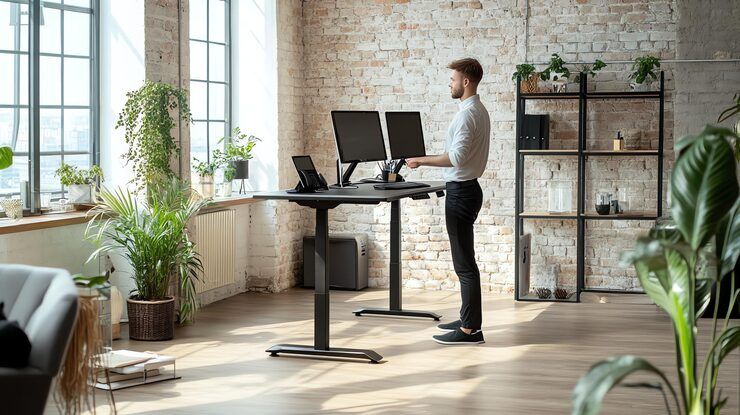
These workstations generally fall into three categories:
- Manual systems: Use a hand crank, lever, or similar mechanical adjustment mechanism.
- Electric systems: Use powered motors and controls to move the desk vertically.
- Pneumatic or counterbalanced systems: Use gas springs or other mechanisms to support smoother adjustments with less physical effort.
Some models include programmable height settings, cable-management components, anti-collision features, and displays showing the current desk height. Others use simpler mechanisms without electronic controls.
The central purpose of a height-adjustable workstation is to make the working environment more adaptable. Its effectiveness depends on appropriate setup, safe operation, suitable equipment, and how frequently users change positions throughout the working day.
Why Height-Adjustable Workstations Matter
Many people spend substantial portions of their working hours using computers, reviewing documents, attending virtual meetings, or completing other desk-based tasks. Remaining in one position for extended periods can contribute to discomfort and reduce opportunities for movement.
Height-adjustable workstations allow users to alternate between sitting and standing without moving to another desk. This flexibility can support changes in posture and make it easier to adapt the workspace to different activities.
Key areas of importance include:
- Ergonomic adaptability: Users can adjust the work surface to accommodate their body dimensions and equipment.
- Postural variation: Alternating positions provides opportunities to avoid remaining stationary for long periods.
- Shared workspaces: Multiple employees can adjust one workstation to their individual requirements.
- Task flexibility: Different desk heights may suit computer work, reading, writing, or collaborative activities.
- Inclusive workplace design: Adjustable equipment can help accommodate a wider range of physical needs, subject to suitable design and accessibility considerations.
These workstations may be particularly relevant to office employees, remote workers, students, designers, engineers, and professionals who alternate between seated computer work and standing activities.
However, standing for prolonged periods is not automatically better than sitting. Extended standing can also cause fatigue and discomfort. The objective is to encourage comfortable movement and position changes rather than replace one prolonged posture with another.
Ergonomic Design and Essential Features
An effective workstation requires more than a movable desk. The chair, monitor, keyboard, mouse, lighting, and available legroom must work together.
When seated, users should generally be able to keep their feet supported, shoulders relaxed, elbows near their sides, and wrists in a relatively neutral position. The monitor should be positioned to avoid repeated neck bending, while frequently used objects should remain within comfortable reach.
When standing, the work surface should allow relaxed shoulders and comfortably positioned elbows. Users should also have enough space to change foot position and move naturally.
Important workstation features include:
- Height range: The desk should accommodate the intended users in both sitting and standing positions.
- Stability: The frame should remain stable at different heights and under its rated load.
- Adjustment controls: Controls should be understandable and accessible.
- Load capacity: The frame must support the desktop, monitors, accessories, and other equipment within manufacturer specifications.
- Cable management: Electrical and data cables should remain clear of moving parts.
- Safety mechanisms: Appropriate models may include collision detection, overload protection, or travel limits.
- Workspace dimensions: The surface should provide sufficient room for the tasks being performed.
Electric models may also provide programmable presets, which can simplify repeated adjustments. These features should be evaluated alongside reliability, maintenance requirements, accessibility, and the workstation's intended use.
Recent Developments and Workplace Trends
During 2025 and 2026, workplace design continued to emphasize flexible work environments, employee comfort, adaptable furniture, and the integration of technology into office equipment. Height-adjustable workstations fit into this broader movement toward workspaces that can accommodate different users and activities.
The following developments are relevant to understanding the current direction of workstation design.
Electric adjustment and programmable controls: Powered frames and memory presets make height changes more convenient. Some systems also offer reminders intended to encourage users to change positions.
Smarter workplace equipment: Connected workplace products increasingly explore usage tracking, equipment monitoring, and integration with workplace management systems. The usefulness of these functions depends on their accuracy, privacy practices, and practical application.
Flexible and shared offices: Organizations using hybrid work arrangements may favor adjustable desks because employees with different physical requirements can use the same workstation.
Accessibility and inclusive design: Workplace planners are paying attention to adjustment ranges, control placement, clearances, and the needs of people with disabilities. A desk's adjustability alone does not guarantee that the entire workstation is accessible.
Sustainability and product durability: Long service life, repairability, replaceable components, and responsible material selection are relevant considerations when evaluating office furniture.
These are broad industry directions rather than claims that every manufacturer has introduced a particular feature during the past year. Product specifications, technical capabilities, and compliance documentation should be checked individually before a workstation is selected.
Laws, Regulations, and Workplace Policies
Height-adjustable workstations are influenced by occupational health and safety requirements, ergonomic recommendations, electrical safety rules, and accessibility policies. The exact obligations depend on the country, industry, workplace, and type of equipment.
In India, the Occupational Safety, Health and Working Conditions Code, 2020, became effective on 21 November 2025, according to the Ministry of Labour and Employment. It forms part of a wider framework governing workplace safety, health, and working conditions. Employers should consult applicable rules, notifications, and state-level requirements to determine their specific obligations.
In the United States, the Occupational Safety and Health Administration (OSHA) provides ergonomic guidance for computer workstations. OSHA explains that desks should allow adequate legroom, appropriate equipment placement, and changes in working posture. Its computer workstation guidance is useful for identifying ergonomic risks, although it does not establish a universal requirement that every office must use height-adjustable desks.
In the European Union, Directive 90/270/EEC establishes minimum health and safety requirements for work involving display screen equipment. Its provisions address workstation design, adjustable seating, workspace dimensions, lighting, and the ability to change position. National legislation implements these requirements within individual member states.
Workplace policies may also address:
- Ergonomic assessments for employees who use computers for extended periods.
- Safe installation and operation of powered desk mechanisms.
- Electrical connections, cable routing, and equipment maintenance.
- Accessibility and reasonable workplace adjustments.
- Reporting and correcting hazards associated with unstable furniture or restricted movement.
Organizations should distinguish between legally binding requirements, technical standards, and voluntary ergonomic recommendations. A workstation should be evaluated according to the rules applicable to its actual location and use.
- Abasic workstation assessment can follow these steps:Record the user's seated and standing working positions.
- Check whether the desk height supports relaxed shoulders and comfortable elbow positioning.
- Confirm that the monitor, keyboard, and mouse are correctly positioned.
- Inspect the available legroom and the routing of electrical cables.
- Review the manufacturer's operating instructions and rated load.
- Reassess the setup after equipment changes or reports of discomfort.
An assessment checklist can help identify common problems, but it does not replace a professional ergonomic assessment when specialized needs or persistent discomfort require further attention.
Frequently Asked Questions
1. What is a height-adjustable workstation?
A height-adjustable workstation is a desk or work surface that can be raised or lowered to accommodate different users, working positions, and tasks. It may use manual, electric, or pneumatic adjustment mechanisms.
2. Are height-adjustable workstations better than fixed desks?
They offer greater flexibility because users can change working height and alternate between sitting and standing. However, their effectiveness depends on appropriate setup and regular movement. A properly configured fixed desk may also provide a suitable working environment for some users.
3. How often should users switch between sitting and standing?
There is no single schedule that suits everyone. Users can change positions periodically according to comfort, task requirements, and workplace guidance. Short walks and movement breaks are also useful. Remaining stationary while standing for extended periods should be avoided.
4. Which features are important when evaluating an adjustable workstation?
Important considerations include adjustment range, frame stability, rated load, available workspace, legroom, control accessibility, cable management, and safety mechanisms. The workstation should accommodate the intended users and the equipment placed on it.
5. Are height-adjustable workstations legally required in every office?
No universal requirement applies to every workplace worldwide. Legal obligations vary by jurisdiction and workplace circumstances. Some regulations require employers to assess and reduce ergonomic risks, but that does not necessarily mean every employee must have an adjustable desk.
Conclusion
Height-adjustable workstations are an important part of modern ergonomic workplace design because they allow people to adapt their working environment to different body dimensions, tasks, and postures. Manual, electric, and pneumatic systems offer different approaches to achieving this flexibility.
Their practical value depends on more than the adjustment mechanism. Proper monitor placement, suitable seating, adequate legroom, safe operation, and regular changes in position all contribute to an effective workstation.
As flexible offices and adaptable equipment become more common, organizations can use ergonomic assessments, manufacturer documentation, and official safety resources to make informed decisions. Understanding the relevant laws and workplace policies also helps ensure that workstation planning supports safety, accessibility, and individual needs.