Birthstone earrings feature gemstones associated with a person's birth month.
Each stone has its own colour, appearance, cultural history, and traditional symbolism. From January garnet to December turquoise, birthstone jewellery connects personal milestones with natural gemstones and decorative design. Understanding birthstone earrings involves exploring their origins, gemstone varieties, popular styles, material choices, and the methods used to maintain their appearance over time.
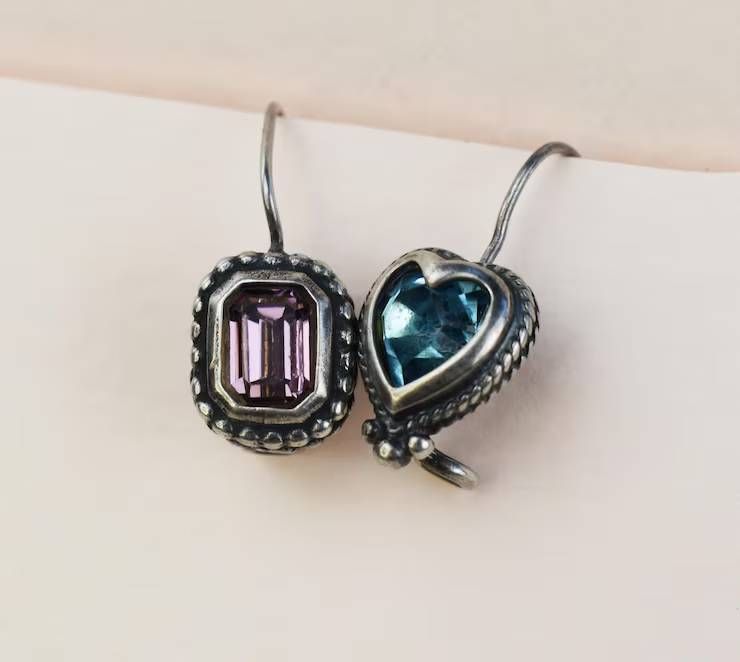
Birthstone earrings are meaningful accessories because they connect jewellery with birthdays, family traditions, and personal identity. Some people select a gemstone according to their birth month, while others choose stones associated with relatives, anniversaries, or important life events.
Personal Meaning and Symbolism
Birthstones have been associated with different qualities across cultures and historical periods. Garnet is traditionally connected with protection and loyalty, while amethyst is often associated with calmness and clarity. These interpretations are cultural traditions rather than scientifically established effects.
Earrings also provide a practical way to wear a meaningful gemstone. Unlike larger jewellery pieces, earrings can be designed for everyday use, formal occasions, or special celebrations.
A Variety of Colours and Styles
Birthstones cover a broad range of colours, including red, purple, blue, green, yellow, and transparent shades. This variety allows people to choose earrings that complement their clothing, preferred colours, or existing jewellery.
Common styles include small gemstone studs, drop earrings, hoops with gemstone accents, and elaborate designs featuring several birthstones. Each style creates a different visual effect.
Birthstones by Month
The modern birthstone calendar includes twelve months, with some months having alternative stones. The table below lists commonly recognised birthstones and their typical colours.
| Birth month | Common birthstone | Typical colour |
|---|---|---|
| January | Garnet | Deep red, with other varieties |
| February | Amethyst | Purple |
| March | Aquamarine | Pale blue |
| April | Diamond | Colourless or various colours |
| May | Emerald | Green |
| June | Pearl or Alexandrite | White, cream, or colour-changing |
| July | Ruby | Red |
| August | Peridot | Yellowish green |
| September | Sapphire | Blue, with other colours |
| October | Opal or Tourmaline | Multicoloured or varied |
| November | Topaz or Citrine | Yellow, golden, or other colours |
| December | Turquoise, Tanzanite, or Zircon | Blue to blue-green |
Birthstone lists can vary according to tradition, jewellery organisations, and regional customs. Some months have several recognised options, giving wearers more flexibility in colour and gemstone selection.
Popular Types of Birthstone Earrings
Birthstone Stud Earrings
Stud earrings feature a gemstone positioned close to the earlobe. They may use a single round stone, a square-cut gem, or a small cluster of stones.
Their compact design makes them suitable for everyday wear, workplaces, and formal occasions. Four-prong, bezel, and basket settings are commonly used to hold gemstones securely.
Birthstone Drop Earrings
Drop earrings hang below the earlobe and create more movement than studs. They may feature a single gemstone, a sequence of small stones, or a gemstone combined with decorative metalwork.
Longer drop designs can highlight the colour and shape of a gemstone. Lightweight construction is important because heavy earrings may pull on the earlobe and become uncomfortable during extended wear.
Birthstone Hoop Earrings
Hoop earrings may incorporate gemstones along the front surface, around the entire hoop, or in a small charm suspended from the design. These earrings combine a familiar shape with personal birthstone symbolism.
Small gemstone hoops often have a subtle appearance, while larger hoops create a more noticeable style. The fastening mechanism should close securely to reduce the possibility of accidental loss.
Birthstone Cluster Earrings
Cluster earrings arrange several small gemstones together to form a flower, star, circular pattern, or other decorative shape. The stones may all represent one birth month, or they may combine several birthstones.
These designs can create a fuller appearance without relying on one large gemstone. However, additional settings and small stones may require more careful cleaning and inspection.
Multi-Stone Family Birthstone Earrings
Family birthstone jewellery incorporates stones representing different family members. An earring pair may use matching combinations, or each earring may feature a different arrangement.
Some designs place several small gemstones in a row, while others use a central stone surrounded by smaller gems. These arrangements can represent children, parents, partners, or other important relationships.
Understanding Birthstone Materials
The appearance, durability, and care requirements of birthstone earrings depend on the gemstones and metals used in their construction.
Natural Gemstones
Natural gemstones form through geological processes and are extracted from the Earth. Their colour, inclusions, and clarity may vary, even among stones of the same type.
Natural gemstones can have individual characteristics that make each piece distinctive. Some may receive treatments to improve colour or clarity, so disclosure of known treatments can be useful when evaluating a gemstone.
Lab-Grown Gemstones
Lab-grown gemstones are created through controlled processes that reproduce the essential crystal structure of their natural counterparts. Lab-grown rubies, sapphires, and diamonds, for example, can have similar chemical and physical properties to their natural equivalents.
They should not be confused with imitations made from glass or other materials. Clear identification helps buyers understand what a gemstone is and how it was produced.
Imitation Gemstones
Imitation stones are materials designed to resemble another gemstone visually. Coloured glass and certain synthetic materials may imitate the appearance of birthstones without sharing their chemical composition or physical properties.
Imitation gemstones can be used in decorative earrings, but they should be identified accurately so that their nature is not mistaken for a natural or lab-grown gem.
Metals Used in Earrings
Birthstone earrings may use gold, silver, platinum, or other metal alloys. The metal affects the overall colour, weight, durability, and appearance of the design.
| Metal | General characteristics | Care consideration |
|---|---|---|
| Gold | Available in yellow, white, and rose shades | Alloy composition affects hardness and colour |
| Sterling silver | Bright, silvery appearance | May tarnish and require periodic polishing |
| Platinum | Naturally pale metal with substantial density | Professional inspection can help maintain settings |
| Stainless steel | Durable metal used in some jewellery designs | Check the grade and suitability for sensitive skin |
Metal allergies vary from person to person. People who experience irritation from earrings should check the metal composition, particularly whether an alloy contains nickel.
How to Choose Birthstone Earrings
Consider the Birth Month and Meaning
The first step is identifying the birthstone associated with the intended month. If a month has several recognised stones, colour preference and practical considerations can guide the choice.
A person may also choose a gemstone based on family connections or personal significance rather than following the traditional calendar.
Evaluate Gemstone Durability
Different gemstones respond differently to scratches, impacts, heat, and cleaning chemicals. Diamond is highly resistant to scratching, while softer or more delicate materials may require extra protection.
Mohs hardness is a scale that describes a mineral's resistance to scratching. However, hardness alone does not determine overall durability. A gemstone can be hard but still vulnerable to chipping if struck at a vulnerable angle.
Match the Earring Design to the Occasion
Studs are generally suitable for frequent wear because they have a compact shape. Drop earrings and cluster designs may be more appropriate for celebrations or occasions when a more decorative appearance is preferred.
Comfort also matters. Consider the weight of the earrings, the shape of the fastening, and whether the design catches on hair or clothing.
Examine Settings and Fastenings
A secure setting helps protect the gemstone from falling out. Prong settings allow more light to reach a stone, while bezel settings surround its edge with metal.
Check that the backs, hinges, clasps, and other fastening parts operate correctly. Loose stones or damaged fastenings should be examined by a qualified jewellery professional before the earrings are worn again.
Birthstone Earrings Trends and Design Developments
Recent jewellery design continues to combine traditional birthstone symbolism with personalisation, varied gemstone colours, and different production methods. Trends differ by region and change over time, so individual designs should be understood as part of a wider evolving jewellery culture rather than a fixed list of universal preferences.
Personalised and Family Designs
Personalised earrings may combine multiple birthstones or use different colours to represent family members. Initials, engraved dates, and symbolic shapes can also accompany gemstones.
This approach gives birthstone jewellery a meaning beyond the month itself. It can represent a family event, friendship, or personal milestone.
Minimalist Gemstone Jewellery
Minimalist designs use small stones, simple metal settings, and limited decorative elements. These earrings emphasise gemstone colour without a large or complicated structure.
Small aquamarine studs, amethyst bezel earrings, and delicate sapphire drops are examples of how birthstones can be incorporated into understated designs.
Colour Combinations and Mixed Gemstones
Some contemporary designs pair birthstones with complementary or contrasting colours. For example, purple amethyst can be combined with pale blue aquamarine, while green peridot can be set beside clear stones.
Mixed-gemstone earrings provide greater flexibility for people whose favourite colour differs from their traditional birthstone.
Traceability and Material Information
Interest in gemstone origin, treatment disclosure, and production practices has made material information an important consideration in jewellery discussions. Documentation may vary by gemstone and seller, and not every stone has the same traceability system.
Consumers can ask for accurate identification of the gemstone, information about known treatments, and details about whether a stone is natural, lab-grown, or an imitation.
Laws and Policies Related to Jewellery in India
Jewellery regulations in India may apply to metal purity, consumer information, advertising, and the sale of certain materials. Requirements depend on the product, the type of claim being made, and the rules in force at the time.
Hallmarking and Precious Metals
The Bureau of Indian Standards (BIS) administers hallmarking frameworks for covered precious-metal articles. Gold jewellery covered by mandatory hallmarking requirements is subject to applicable rules and exemptions. Silver hallmarking arrangements differ from those for gold, so consumers should check the relevant current BIS guidance.
A hallmark primarily provides information about the metal's fineness and related identification. It does not independently prove that the gemstone is natural, untreated, or from a particular country.
Consumer Protection
India's Consumer Protection Act, 2019, establishes a framework addressing consumer rights and misleading representations. Descriptions of birthstone earrings should accurately identify the material and avoid confusing natural gemstones with lab-grown stones or imitations.
Written product information, invoices, and relevant gemstone documentation can help clarify what was represented in a transaction.
Gemstone Identification and Disclosure
The precise rules applicable to gemstone descriptions may depend on the circumstances and the representations made. Where authenticity, treatment, or origin is important, a report from a recognised gemological laboratory can provide additional information. A laboratory report should be checked for its scope and limitations.
Tools and Resources for Birthstone Earrings
Several resources can help people understand gemstones and jewellery construction.
- Gemological reference guides: Explain gemstone identification, colour, clarity, hardness, and common treatments.
- BIS resources: Provide information about hallmarking and applicable precious-metal standards in India.
- Jewellery care instructions: Explain safe cleaning methods for specific gemstones and metals.
- Gemstone laboratory reports: May identify a stone and describe selected characteristics or treatments.
- Jewellery loupe: A magnifying tool that can help examine settings, visible inclusions, and surface condition. It does not replace professional gemstone identification.
Before cleaning birthstone earrings, check whether the gemstone is sensitive to heat, chemicals, or ultrasonic cleaning. Pearls, opals, and certain treated or fracture-filled stones may require gentler handling than more durable gemstones.
Frequently Asked Questions
What are birthstone earrings?
Birthstone earrings feature gemstones traditionally associated with a particular birth month. They may be designed as studs, hoops, drops, or clusters and can use natural, lab-grown, or imitation stones.
Can I wear a birthstone that is not associated with my birth month?
Yes. Birthstone traditions are personal and cultural rather than mandatory rules. People can choose any gemstone based on colour, symbolism, family meaning, or design preference.
Are birthstone earrings suitable for everyday wear?
Many are suitable for everyday wear, especially lightweight studs with secure settings. Suitability depends on gemstone durability, earring weight, metal composition, and the activities performed while wearing them.
How should birthstone earrings be cleaned?
For many durable gemstones, a soft cloth and mild soapy water may be appropriate, but cleaning methods depend on the stone and its treatments. Pearls, opals, and other delicate materials often need gentler care. Avoid ultrasonic cleaners unless the gemstone and setting are known to tolerate them.
What is the difference between natural and lab-grown birthstones?
Natural birthstones form through geological processes, while lab-grown stones are produced under controlled conditions. Some lab-grown gemstones share the chemical composition and crystal structure of natural stones, whereas imitation materials only resemble their appearance.
Conclusion
Birthstone earrings combine gemstone colour, personal symbolism, and jewellery design. Understanding the twelve monthly birthstones, the differences between natural and lab-grown gems, and the features of common earring styles helps people make informed choices. Proper care and accurate material identification can also help preserve the appearance and usefulness of a pair of earrings. Whether chosen for a birthday, a family connection, or personal style, birthstone earrings offer many ways to express individual meaning through jewellery.