A cable cutting machine is equipment that separates a cable into predetermined lengths using a blade, cutting wheel, shear mechanism, or another suitable cutting system.
Some machines are operated manually, while others use electric motors, pneumatic mechanisms, or computerized controls to improve consistency and reduce repetitive work.
Cable cutting machines are designed for different materials and thicknesses. A machine used for small electrical wires may not be suitable for thick steel wire ropes or armored industrial cables.
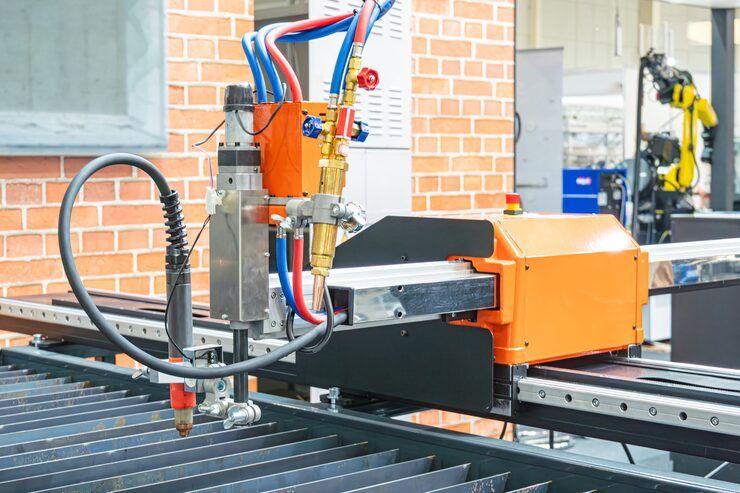
Common machine categories include:
- Manual cable cutters: Hand-operated tools for smaller cables and maintenance tasks.
- Electric cable cutting machines: Motor-powered equipment for repeated cutting operations.
- Automatic cable cutting machines: Systems that feed cable, measure its length, and cut it according to programmed settings.
- Wire processing machines: Equipment that may combine cutting with stripping, crimping, or terminal preparation.
- Heavy-duty cable cutters: Machines designed for thicker electrical cables or other demanding materials.
- Wire rope cutting machines: Specialized equipment for cutting steel wire ropes and similar metallic products.
Selecting an appropriate machine requires understanding the cable material, diameter, insulation, production volume, and required cutting accuracy.
Importance of Cable Cutting Machines
Cable cutting machines help manufacturers and technicians prepare cable materials for installation, assembly, and further processing.
Consistent cable lengths
Accurate cutting helps ensure that cables meet specified length requirements. This is important in electrical panels, vehicle wiring harnesses, and equipment assembly, where incorrect lengths can complicate installation.
Improved production efficiency
Automated machines can feed and cut multiple cable lengths with less repetitive manual handling. This is particularly useful in production environments where many identical cable sections are needed.
Reduced material waste
Programmable length settings and controlled feeding can reduce errors caused by inconsistent manual measurement. Material savings depend on machine calibration, cable characteristics, and production planning.
Support for electrical manufacturing
Cable cutting equipment is used to prepare conductors for wiring harnesses, control panels, appliances, and industrial electrical systems.
Improved workplace consistency
Appropriate machinery can make repetitive cutting tasks more predictable. Guards, emergency stops, suitable work surfaces, and operator training remain essential for safe operation.
Main Types of Cable Cutting Machines
Different machines are designed around the physical properties of the cable and the requirements of the production process.
| Machine type | Main operating method | Common applications |
|---|---|---|
| Manual cable cutter | Hand-operated cutting blades | Maintenance and small electrical tasks |
| Electric cable cutter | Motor-driven cutting mechanism | Repeated cutting of suitable cables |
| Automatic wire cutting machine | Controlled feeding and programmed cutting | Wiring harness and electronics production |
| Pneumatic cable cutter | Compressed-air-powered cutting mechanism | Repetitive industrial cutting |
| Hydraulic cable cutter | Hydraulic force drives the cutting head | Certain large-diameter electrical cables |
| Wire rope cutting machine | Specialized shearing or cutting system | Steel wire rope preparation |
| CNC wire processing system | Computer-controlled feeding and cutting | High-volume or complex wire preparation |
Not every cable cutting machine uses computer numerical control (CNC), hydraulics, or pneumatic power. These features are found in specific equipment categories according to the intended application.
How Automatic Cable Cutting Machines Work
Automatic cable cutting machines typically combine a feeding mechanism, measuring system, cutting unit, and control interface.
Cable feeding
The cable is loaded onto a reel or supply stand and guided through rollers or feed wheels. The feeding mechanism advances the cable toward the cutting head.
Length measurement
A measuring wheel, encoder, or other sensor estimates how far the cable has moved. The controller compares this measurement with the programmed target length.
Cutting operation
When the target length is reached, the machine activates its cutting mechanism. Depending on the design, this may involve a blade, shear, or another suitable tool.
Output collection
The cut cable section is released for collection, further processing, or transfer to another workstation. Some systems can count pieces or arrange the output for subsequent operations.
Control and adjustment
Operators can set parameters such as cut length, quantity, feed speed, and sometimes stripping length. Settings should be checked against the machine's specifications and the cable manufacturer's requirements.
Calibration is important because cable flexibility, insulation compression, feed-wheel slippage, and measurement settings can affect the final length.
Industrial Applications of Cable Cutting Machines
Cable cutting equipment supports a wide range of manufacturing and installation activities.
Electrical panels and control systems
Electrical panel manufacturers prepare wires in specified lengths to connect circuit breakers, relays, terminals, sensors, and control components. Consistent lengths help organize wiring and simplify assembly.
Automotive manufacturing
Vehicles contain extensive wiring harnesses that connect electronic controls, lights, sensors, and other electrical systems. Automatic wire cutting and processing equipment can prepare many wire segments for later assembly.
Telecommunications
Communication infrastructure uses copper wires, coaxial cables, and fiber-optic cables. Cutting requirements vary by cable type. Fiber-optic work may require specialized precision tools and must follow procedures that prevent contamination or damage to the fiber.
Construction and electrical installation
Electricians prepare power cables and wiring for buildings, industrial facilities, and infrastructure projects. The cutting equipment must match the cable's conductor size, insulation, and construction.
Renewable energy systems
Solar installations, battery systems, and wind energy equipment use electrical cables for power transmission and control. Cable preparation must follow the relevant installation specifications and safety requirements.
Marine and industrial equipment
Ships, manufacturing plants, and heavy equipment may use robust cables with specialized insulation or protective layers. These applications can require dedicated cutting equipment.
Features to Consider When Selecting Cable Cutting Equipment
Choosing a machine requires more than comparing its advertised cutting speed. The equipment must match the materials and production conditions in which it will operate.
| Feature | Why it matters |
|---|---|
| Supported cable diameter | Determines the range of cable sizes the machine can handle |
| Material compatibility | Ensures the cutting mechanism suits copper, aluminum, insulation, steel, or other materials |
| Cutting length range | Defines the minimum and maximum programmable lengths |
| Length accuracy | Indicates how closely output can match the target measurement under specified conditions |
| Production capacity | Helps determine suitability for expected workload |
| Feeding system | Affects cable handling and repeatability |
| Control interface | Determines how operators configure lengths and quantities |
| Safety equipment | Helps reduce exposure to moving blades and other hazards |
| Maintenance requirements | Influences downtime and long-term operating needs |
Manufacturers may describe performance using different test conditions. Buyers and engineers should review technical specifications, sample-cut results, and documented operating limits before choosing equipment for a particular process.
Recent Updates and Trends in Cable Cutting Technology
Cable processing equipment continues to evolve alongside manufacturing automation, connected production systems, and increasing demands for consistent electrical assembly.
Greater automation
Automatic feeding, programmable cutting lengths, and piece counting reduce the need for repeated manual measurement. Some production lines connect cutting equipment with stripping, crimping, marking, and wire harness assembly systems.
Digital production monitoring
Modern industrial equipment may include digital displays, programmable controllers, production counters, and communication interfaces. These features can help supervisors track output and identify interruptions, depending on the machine's capabilities.
Integration with manufacturing systems
Some automated wire processing lines exchange production instructions with manufacturing execution systems or other factory software. This can support more consistent workflows and production records.
Precision for specialized cables
As electrical systems become more complex, cable preparation may require careful handling of fine conductors, multilayer insulation, shielding, or fiber-optic components. Specialized tools and process controls help prevent damage during cutting.
Focus on operator safety
Industrial equipment design increasingly emphasizes machine guarding, emergency stops, safe maintenance procedures, and risk assessment. The actual safety features available depend on the machine design and applicable standards.
Specific capabilities vary across models. Technical documentation should be reviewed before assuming that a particular machine supports automated monitoring, remote connectivity, or integrated wire processing.
Laws and Safety Standards Relevant to Cable Cutting Machines in India
Cable cutting equipment must be operated in accordance with applicable workplace safety requirements and the technical rules relevant to its use.
Occupational and factory safety
India's occupational safety framework includes the Occupational Safety, Health and Working Conditions Code, 2020. The precise obligations depend on the applicable commencement provisions, rules, establishment type, and other relevant requirements. Employers should verify the current legal framework governing their workplace.
Electrical safety
Where cable cutting forms part of electrical installation or manufacturing, applicable electrical safety requirements and relevant technical standards should be followed. Cutting equipment should not be treated as safe for work on energized conductors unless a specific approved procedure and equipment are designed for that purpose.
Machine guarding
Moving blades, rollers, and feed mechanisms can cause serious injuries. Guards, emergency stops, safe operating procedures, and appropriate training should be provided according to the equipment's design and applicable requirements.
Quality and technical standards
Relevant Indian Standards and international standards may apply depending on the machine type, industry, and intended use. Manufacturers and operators should identify the standards specified for their equipment rather than assuming one standard applies to every cable cutter.
Safe operating practices
- Disconnect power before performing maintenance where required by the manufacturer's procedures.
- Keep hands away from blades and moving feed rollers.
- Use the specified cutting tools for the intended cable material.
- Inspect blades, guards, cables, and emergency stops regularly.
- Train operators to recognize faults and follow lockout procedures where applicable.
For current legal obligations, consult official Indian government publications, the relevant state factory or labour authority, and applicable standards documentation.
Tools and Resources for Cable Cutting Operations
Several resources help engineers, operators, and production teams plan cable preparation and maintain equipment.
| Tool or resource | Purpose | Typical use |
|---|---|---|
| Digital measuring equipment | Checks cable length | Verify sample cuts and calibration |
| Cable specification sheets | Describe conductor, insulation, and dimensions | Confirm material compatibility |
| Machine user manual | Explains setup, limits, and maintenance | Configure the machine correctly |
| Programmable logic controller (PLC) interface | Controls supported automated functions | Set lengths and operating sequences |
| Preventive maintenance checklist | Records inspections and maintenance | Identify wear and operating problems |
| Applicable safety standards | Define relevant technical and safety requirements | Guide equipment selection and safe operation |
Production teams should maintain records of calibration, blade replacement, faults, and routine inspections where appropriate.
Frequently Asked Questions
What is a cable cutting machine used for?
A cable cutting machine cuts electrical wires, power cables, communication cables, or other compatible materials to specified lengths. Some systems also support stripping, counting, or additional wire processing.
What is the difference between manual and automatic cable cutting machines?
Manual machines require an operator to position and cut each cable section. Automatic systems can feed material, measure length, and perform repeated cuts using programmed settings. The suitable option depends on production volume and cable requirements.
Can one machine cut every type of cable?
No. Cable construction varies considerably. Copper wires, thick insulated power cables, steel wire ropes, and fiber-optic cables may require different cutting mechanisms and tools.
How is cutting accuracy maintained?
Accuracy depends on calibration, measurement systems, feed-wheel condition, blade quality, cable characteristics, and correct machine settings. Periodic sample checks help identify deviations.
What safety precautions are important when using cable cutting machines?
Operators should use appropriate guards, keep hands clear of moving parts, follow the manufacturer's instructions, inspect the equipment, and disconnect or isolate power before maintenance when required.
Conclusion
Cable cutting machines play an important role in electrical manufacturing, automotive assembly, telecommunications, construction, and industrial production. Equipment ranges from simple manual cutters to automated systems that measure and cut cables according to programmed specifications. Selecting the appropriate machine requires considering cable material, diameter, cutting accuracy, production needs, and safety features. Proper calibration, maintenance, operator training, and compliance with relevant standards help support consistent and safe cable preparation.