Paper core cutting machines are industrial machines designed to cut paper tubes into specific lengths according to production requirements.
These tubes, commonly called paper cores, are used as central supports for winding flexible materials such as paper, plastic films, textiles, labels, adhesive tapes, and packaging materials.
Paper cores are manufactured by winding layers of paper around a mandrel and bonding them with adhesive. Once the tube reaches the required thickness and diameter, it is cut into shorter sections. Paper core cutting machines perform this cutting operation accurately and efficiently, helping manufacturers prepare uniform cores for different industrial applications.
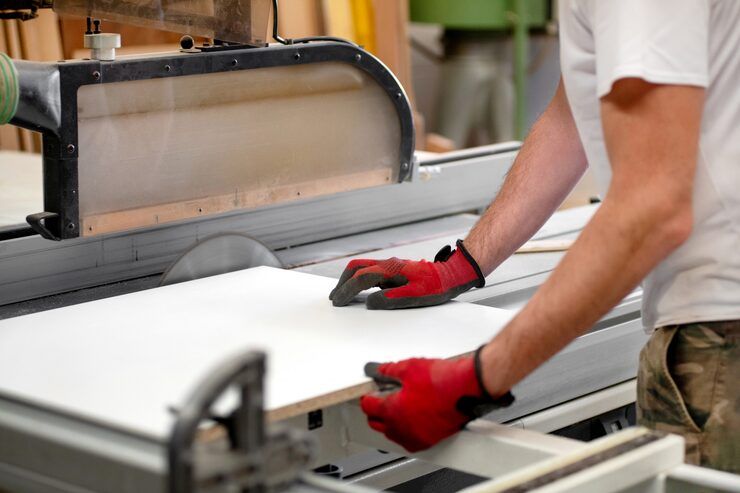
These machines are available in manual, semi-automatic, and fully automatic configurations. Their capabilities vary according to tube diameter, wall thickness, cutting length, production volume, and material characteristics. Some machines are designed for lightweight cores used in consumer packaging, while others handle heavy-duty cores for large industrial rolls.
As packaging, converting, textile, and paper-processing industries continue to use wound materials, demand for consistent core dimensions remains important. Selecting an appropriate cutting machine can help manufacturers improve production consistency, reduce material waste, and maintain the quality required by downstream equipment.
Importance
Paper core cutting machines play an important role in manufacturing environments where tubes must meet precise dimensional requirements. Inconsistent cutting can create difficulties during winding, transportation, storage, and subsequent processing.
1. Accurate cutting dimensions
A paper core must have the correct length to fit the intended roll or winding system. Cutting machines use adjustable stops, measuring systems, or programmed controls to produce the required dimensions. Higher-precision systems can improve repeatability when processing large batches.
2. Improved production efficiency
Manual cutting can require considerable operator attention, particularly when production involves many different tube lengths. Automated feeding, cutting, and length adjustment can reduce repetitive handling and help manufacturers maintain a more consistent production rate.
3. Reduced material waste
Poorly aligned cuts, damaged tube edges, and incorrect measurements can lead to rejected cores. Appropriate blades, stable tube clamping, and correct machine settings help reduce unnecessary waste. Regular maintenance also contributes to consistent cutting performance.
4. Better edge quality
Clean, even edges are important when paper cores are used in winding and packaging equipment. Uneven cuts may cause handling difficulties or affect how a roll sits on its support. A suitable cutting mechanism helps maintain edge quality while limiting crushing and deformation.
5. Flexibility across industries
Paper cores differ in diameter, length, wall thickness, and strength. Adjustable machines allow manufacturers to process different tube specifications, subject to the machine's operating limits. This flexibility is useful for businesses supplying multiple packaging and converting applications.
6. Improved workplace organization
Modern cutting systems may incorporate guards, emergency stops, controlled feeding, and dust-management arrangements. These features can help create a more organized production environment when combined with suitable training, inspection, and operating procedures.
Recent Updates
Developments in paper core cutting technology reflect wider manufacturing trends, including automation, digital controls, energy efficiency, and workplace safety. Available features vary by manufacturer and machine model, so technical specifications should be checked carefully before equipment selection.
Growth of automated cutting systems
Automated machines can combine tube feeding, length measurement, clamping, cutting, and finished-piece collection. Depending on the configuration, these systems can reduce manual handling and support repeatable production. Their suitability depends on required output, product variety, and the level of automation already present in the factory.
Digital measurement and control
Programmable logic controllers and digital measurement systems can simplify length adjustment and production monitoring. Some machines allow operators to store cutting settings for recurring tube specifications. This can reduce setup errors when switching between product batches.
Improved blade and cutting mechanisms
Manufacturers use different blade designs and cutting methods to accommodate different tube materials and wall thicknesses. Appropriate tooling can improve cut quality and blade life. The best configuration depends on tube strength, adhesive characteristics, cutting speed, and the desired edge finish.
Integration with factory automation
Certain cutting machines can be incorporated into broader production lines involving tube winding, material handling, inspection, and packaging. Automated transfer systems may reduce manual movement between operations and support a more continuous workflow.
Greater attention to safety and maintenance
Machine design increasingly emphasizes guarding, emergency-stop accessibility, controlled operating procedures, and easier maintenance access. Effective dust extraction may also be important where cutting generates paper particles. These features should be assessed alongside productivity and cutting accuracy.
As of October 2026, specific machine capabilities and control systems differ across suppliers. Buyers should review current manufacturer documentation, request production demonstrations when appropriate, and confirm that advertised performance applies to their actual tube dimensions and material.
Laws or Policies
Paper core cutting machines must be operated in accordance with the workplace safety, machinery, electrical, and environmental requirements applicable to their location. In India, manufacturers and industrial users should review the relevant requirements before installation and operation.
Machinery and workplace safety
Employers should assess risks associated with rotating parts, cutting blades, moving feed mechanisms, electrical equipment, and material handling. Appropriate guards, emergency stops, maintenance procedures, and operator training are important safeguards. Guards should not be removed or bypassed during normal operation.
Electrical safety
Industrial machines must be installed and maintained according to applicable electrical safety requirements and manufacturer instructions. Proper earthing, suitable protective devices, safe wiring, and qualified installation practices help reduce electrical hazards.
Worker protection
Operators should receive training on safe feeding, cutting, adjustment, cleaning, and shutdown procedures. Personal protective equipment should be selected according to the hazards identified in the workplace risk assessment. Loose clothing and accessories that could become entangled in machinery should be avoided.
Environmental management
Paper dust, adhesive residues, noise, and waste materials may require appropriate controls depending on the production process. Factories should follow applicable environmental and waste-management requirements and maintain suitable housekeeping practices.
Equipment documentation
Manufacturers and suppliers should provide relevant operating instructions, maintenance schedules, technical specifications, and safety information. Industrial buyers should confirm installation requirements, warranty terms, spare-parts availability, and applicable compliance documentation before commissioning a machine.
Regulatory requirements may differ according to the machine type, installation site, and industry. Businesses should consult current guidance from relevant Indian authorities and qualified safety professionals to determine the requirements that apply to their operations.
Tools and Resources
The following resources can help manufacturers evaluate paper core cutting equipment and plan production requirements.
1. Machine manufacturer technical catalogs
Technical catalogs typically describe cutting capacity, tube diameter range, wall thickness limits, maximum cutting length, drive system, and control configuration. These details help determine whether a machine is suitable for the intended production process.
2. Programmable logic controllers (PLCs)
PLCs are used in automated machinery to coordinate operations such as feeding, clamping, cutting, and finished-product handling. Their usefulness depends on the complexity of the machine and the level of process control required.
3. Digital measuring systems
Digital length measurement, encoders, and programmed length settings can support repeatable cutting. Manufacturers should verify measurement accuracy and calibration procedures under actual production conditions.
4. Preventive maintenance checklists
Maintenance records can track blade condition, alignment, lubrication, electrical inspections, guarding, and cleaning. Regular checks help identify developing problems before they affect production quality.
5. Quality inspection instruments
Calipers, measuring tapes, and suitable dimensional inspection tools can help verify tube diameter, length, and other product specifications. Inspection frequency should reflect the production volume and required tolerances.
6. Industrial safety guidance
Applicable occupational safety guidance can help manufacturers assess machine guarding, electrical protection, dust management, and operator training. Safety requirements should be reviewed before commissioning and whenever equipment or production conditions change.
FAQs
1. What is a paper core cutting machine?
A paper core cutting machine is industrial equipment that cuts paper tubes into specified lengths. These tubes are used in packaging, paper processing, textiles, plastic film winding, labels, and adhesive tape production.
2. What are the main types of paper core cutting machines?
Common types include manual, semi-automatic, and fully automatic machines. Some use circular blades, while others use alternative cutting arrangements suited to particular tube specifications. Selection depends on production volume, tube dimensions, and required accuracy.
3. Which industries use paper core cutting machines?
These machines are used in paper mills, packaging plants, textile manufacturing, plastic film processing, label converting, adhesive tape production, and other industries that wind materials onto cylindrical cores.
4. What factors determine cutting accuracy?
Accuracy depends on the measuring system, blade condition, tube alignment, clamping stability, machine rigidity, and operator settings. Regular calibration and preventive maintenance help maintain consistent dimensions.
5. Can one machine cut different paper core sizes?
Many machines support multiple sizes within a defined operating range. However, maximum and minimum tube diameters, wall thickness, cutting length, and tooling requirements vary. Buyers should verify the complete specification range before selecting equipment.
6. How can paper core waste be reduced?
Waste can be reduced through accurate measurement, correct blade selection, stable clamping, regular maintenance, and appropriate operator training. Inspecting sample cuts before a large production run can also help identify incorrect settings early.
7. What maintenance does a paper core cutting machine require?
Typical maintenance includes checking blade sharpness, inspecting guards and emergency stops, verifying alignment, cleaning paper dust, inspecting electrical components, and following the manufacturer's lubrication schedule. Maintenance should always be performed under safe shutdown procedures.
8. What should manufacturers consider when choosing a machine?
Important factors include production capacity, tube diameter, wall thickness, cutting-length range, accuracy, automation level, floor space, safety features, energy requirements, and after-sales technical support. A production trial using representative tubes can help confirm suitability.
Conclusion
Paper core cutting machines are essential equipment for manufacturers that need consistent, accurately sized paper tubes for winding and packaging applications. From manual systems for smaller production runs to fully automated equipment for larger manufacturing operations, different machine configurations address different production requirements.
Choosing the right machine requires careful consideration of tube dimensions, material characteristics, required output, cutting accuracy, safety features, and maintenance needs. Digital measurement, automated feeding, and programmable controls can improve repeatability when properly configured and maintained.