Concrete vibrators are construction tools used to remove trapped air from freshly placed concrete and help the mixture settle into the spaces around reinforcement, formwork, and embedded components.
This process, known as concrete vibration or consolidation, improves the density and uniformity of hardened concrete when performed correctly.
Fresh concrete contains water, cement, sand, coarse aggregates, and sometimes chemical admixtures. During mixing, transportation, and placement, air can become trapped within the mixture. If this air remains in the concrete, it may create voids, honeycombing, and weak areas that affect the finished structure's strength, appearance, and durability.
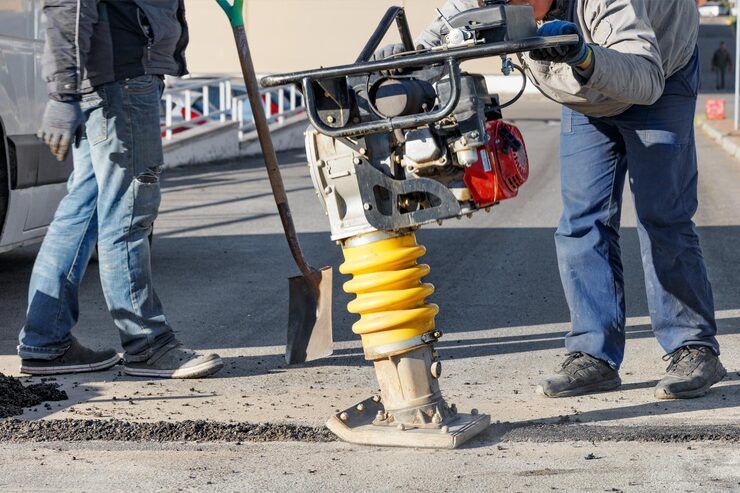
Concrete vibrators generate controlled mechanical vibrations that temporarily reduce internal friction within the fresh mixture. This allows concrete particles to rearrange and trapped air to rise toward the surface. The result is a more compact mass that can fill formwork and surround reinforcement more effectively.
Concrete vibrators are commonly used in residential buildings, commercial structures, bridges, roads, foundations, precast concrete production, and large infrastructure projects. Their design varies according to the application, concrete consistency, placement depth, and required production rate.
Importance
Why Concrete Vibration Matters
Proper consolidation is an important part of concrete placement. Even a carefully designed concrete mixture can develop defects if it is not placed and compacted appropriately. Concrete vibration helps reduce entrapped air and improves contact between the concrete, reinforcement, and formwork.
The main benefits include:
- Improved density: Vibration helps concrete particles settle into a more compact arrangement.
- Reduced honeycombing: Proper consolidation reduces voids and exposed aggregate pockets caused by inadequate compaction.
- Better reinforcement coverage: Concrete can flow around steel reinforcement and embedded components more effectively.
- Improved surface finish: Appropriate vibration helps reduce visible air pockets and surface irregularities.
- Greater consistency: Controlled compaction supports more uniform concrete throughout a placement.
- Improved durability: Reducing consolidation defects can help limit pathways through which water and aggressive substances may enter the concrete.
Vibration does not automatically guarantee a particular strength or durability level. Concrete performance also depends on mix design, water content, curing, placement conditions, materials, and workmanship. Excessive vibration can also cause problems, especially when the mixture is unsuitable or the procedure is poorly controlled.
Main Types of Concrete Vibrators
Concrete vibrators are available in several configurations. Each type is suited to particular placement conditions and construction requirements.
1. Internal or Immersion Vibrators
Internal vibrators, also called poker or needle vibrators, have a vibrating head that is inserted directly into freshly placed concrete. The head produces vibrations within the mixture, helping consolidate concrete around reinforcement and throughout the placement depth.
These vibrators are widely used for beams, columns, walls, foundations, slabs, and other reinforced concrete structures. Head diameter, operating frequency, vibration amplitude, and insertion depth affect performance.
Internal vibrators are particularly useful where concrete must surround closely spaced reinforcement. The operator must select a suitable head size so it can reach the required areas without damaging reinforcement or formwork.
2. External or Formwork Vibrators
External vibrators are attached to the outside of formwork. They transmit vibrations through the formwork and into the concrete rather than being inserted directly into the mixture.
These systems are common in precast concrete factories and applications where internal access is restricted. They may also be used for thin sections, complex moulds, and heavily reinforced components.
The formwork must be designed to withstand the vibration forces. Incorrect positioning or excessive vibration may damage moulds, loosen connections, or cause leakage.
3. Surface Vibrators
Surface vibrators operate on or near the upper surface of freshly placed concrete. They are commonly used for slabs, floors, pavements, and other relatively shallow concrete sections.
Examples include vibrating screeds and vibrating plates designed for suitable concrete applications. These tools help consolidate and level the surface layer, although their effectiveness depends on slab thickness and mixture characteristics.
Surface vibration alone may not be sufficient for thick sections or heavily reinforced concrete.
4. Vibrating Tables
Vibrating tables support moulds or containers and transmit vibration through their base. They are frequently used in precast manufacturing for concrete blocks, paving units, small panels, and other moulded products.
The table helps the concrete settle within the mould and can improve consistency across repeated production cycles. The vibration settings must match the product geometry and concrete mixture.
5. Specialized Vibrating Systems
Large construction projects may use purpose-designed vibration equipment for particular placement conditions. These systems can include multiple external vibrators, automated precast mould vibration arrangements, and equipment integrated into production lines.
Selection depends on engineering requirements, concrete properties, structural geometry, and the manufacturer's operating guidance.
Power Sources and Equipment Components
Concrete vibrators may be powered by electricity, petrol engines, diesel engines, pneumatic systems, or hydraulic systems. The appropriate choice depends on the worksite, available power, ventilation, mobility, and operating duration.
A typical internal vibrator system includes a vibrating head, flexible shaft or transmission assembly, drive unit, and power connection. Some models integrate the motor within the vibrating head, while others use a separate motor or drive unit.
Important specifications include:
- Head diameter: Influences the area affected by each insertion and access between reinforcement bars.
- Frequency: Describes how many vibration cycles occur per second or minute.
- Amplitude: Describes the extent of movement generated by the vibrating system.
- Operating power: Influences the equipment's ability to work under the intended conditions.
- Shaft length: Determines how easily the operator can reach different depths.
- Weight and ergonomics: Affect handling, fatigue, and control during extended operation.
- Duty rating: Indicates whether the equipment is intended for intermittent or sustained operation under specified conditions.
Manufacturers may publish frequency in hertz or vibrations per minute. These values should be interpreted alongside amplitude, head size, and intended use rather than considered independently.
Proper Concrete Vibration Techniques
Correct operating technique helps achieve effective consolidation without damaging the concrete or surrounding components.
- Check the equipment: Inspect the vibrating head, shaft, power supply, connectors, and safety features before use.
- Place concrete in suitable layers: Follow the placement plan and avoid creating layers that exceed the vibrator's effective consolidation depth.
- Insert vertically where appropriate: For internal vibration, insert the head into the concrete in a controlled manner. Avoid using it to push concrete horizontally across the formwork.
- Use systematic spacing: Arrange insertion points so the affected zones overlap sufficiently, following the equipment manufacturer's guidance and the concrete placement conditions.
- Allow sufficient vibration time: Keep the head in each position long enough to consolidate the mixture, but avoid unnecessary prolonged vibration.
- Withdraw gradually: Remove the head slowly enough to allow the surrounding concrete to close the opening left by the vibrator.
- Coordinate with placement: Work with the concrete placement team to maintain a consistent sequence and avoid cold joints or areas that are difficult to reach.
Signs of adequate consolidation may include reduced release of entrapped air and a more uniform appearance around the insertion area. Surface appearance alone is not a reliable measure of complete consolidation, particularly in deep or heavily reinforced sections.
Risks of Under-Vibration and Over-Vibration
Under-vibration occurs when the concrete is not consolidated sufficiently. It can leave trapped air pockets, honeycombing, poor contact with reinforcement, and uneven surfaces. These defects may reduce the effective structural performance of the concrete and create areas vulnerable to moisture penetration.
Over-vibration occurs when excessive vibration causes undesirable changes in the mixture. Depending on the concrete's workability and composition, this may contribute to segregation, in which coarse aggregates separate from the cement paste, or excessive movement of materials within the formwork.
The risk depends on factors such as the mixture's cohesion, aggregate grading, admixtures, placement depth, and vibration method. The correct procedure should therefore follow the approved construction method and the characteristics of the concrete being placed.
Recent Updates
Modern Equipment and Process Monitoring
During the 12 months preceding October 13, 2026, digital monitoring and improved equipment design remained relevant areas across construction machinery. However, specific concrete-vibrator product launches or measurable adoption changes during this period should not be assumed without verified industry evidence.
Modern construction equipment may incorporate improved motor protection, ergonomic handles, variable-speed controls, battery-powered operation, or electronic monitoring features. The availability of these features varies by manufacturer and equipment model.
Battery-powered vibrators can be useful where mobility and reduced dependence on mains power are important. Their suitability depends on battery capacity, runtime, vibration performance, charging arrangements, and the scale of the concrete placement.
Some construction teams also use digital inspection records, equipment maintenance logs, and standardized placement procedures to improve traceability. These measures support quality management but do not replace skilled operation or appropriate engineering supervision.
Focus on Concrete Quality and Worker Safety
Construction quality management increasingly emphasizes prevention of defects, documented procedures, and consistent workmanship. For concrete vibration, this means selecting suitable equipment, training operators, inspecting tools, and verifying consolidation as part of the wider concrete placement process.
Worker safety remains essential, particularly when using electrical equipment in wet environments or operating heavy machinery for extended periods. Appropriate protective equipment, electrical safeguards, ergonomic practices, and maintenance procedures help reduce hazards.
Laws or Policies
Construction Standards and Concrete Quality
Concrete vibration requirements depend on the project's jurisdiction, structural design, contract specifications, and applicable building standards.
In India, the Bureau of Indian Standards (BIS) publishes standards relevant to concrete materials, construction practices, and structural design. IS 456, titled Plain and Reinforced Concrete — Code of Practice, is an important reference for concrete construction. Project teams should verify the current applicable edition, amendments, and any additional requirements specified by the relevant authority.
The appropriate consolidation procedure should be established according to the concrete mixture, structural member, reinforcement arrangement, and approved method statement. Critical structures may require additional inspection and quality-control procedures.
Electrical and Workplace Safety
Electrical concrete vibrators should be used according to the manufacturer's instructions and applicable electrical safety requirements. Construction teams should inspect cables, connectors, plugs, protective devices, and equipment enclosures before operation.
Where equipment is used in wet conditions, suitable electrical protection and safe power arrangements are particularly important. Damaged cables or equipment should be removed from use until properly repaired.
Engine-powered equipment should be operated with adequate ventilation and away from enclosed areas where exhaust gases could accumulate. Workers should also use appropriate hearing, eye, hand, and foot protection according to the identified risks.
Equipment Maintenance and Operator Training
Employers and contractors should establish maintenance and inspection procedures appropriate to the equipment and worksite. Operators need to understand correct insertion techniques, safe handling, equipment limitations, and signs of malfunction.
Applicable occupational safety obligations vary by location and project type. Contractors should follow relevant national and local rules, site safety plans, and manufacturer recommendations.
Tools and Resources
Bureau of Indian Standards (BIS)
BIS provides information about Indian standards relevant to concrete materials, construction, and structural engineering. Project teams can consult applicable standards when preparing construction procedures and quality requirements.
Manufacturer Operation Manuals
Equipment manuals explain operating limits, head selection, recommended procedures, maintenance intervals, and safety precautions. They should be consulted before equipment is used on a new type of concrete placement.
Concrete Quality-Control Checklists
Inspection checklists can help teams document concrete placement, equipment condition, layer depth, vibration sequence, and observed defects. They should be adapted to the project's approved inspection and test plan.
Construction Safety Guidance
Official workplace safety guidance can help contractors assess electrical hazards, vibration exposure, manual handling, noise, and safe operation in wet environments.
Concrete Testing Equipment
Slump-testing equipment and other approved fresh-concrete tests help assess mixture consistency. Compressive-strength specimens and other project-specified tests provide additional information about concrete performance. These tests complement, rather than replace, appropriate consolidation practices.
Equipment Maintenance Records
Maintenance logs can record inspections, repairs, component replacement, and recurring operational problems. Regular documentation helps teams identify deterioration before it disrupts concrete placement.
FAQs
What is a concrete vibrator used for?
A concrete vibrator removes entrapped air and helps freshly placed concrete settle around reinforcement and within formwork. Proper consolidation can reduce voids and improve the uniformity of hardened concrete.
Which type of concrete vibrator is most commonly used?
Internal or immersion vibrators are widely used for general reinforced concrete work, including columns, beams, walls, and foundations. External and surface vibrators are more suitable for particular moulding, precast, slab, and pavement applications.
How long should concrete be vibrated?
There is no single duration suitable for every concrete mixture and application. Vibration should continue long enough to achieve effective consolidation without causing segregation. Operators should follow the approved placement procedure, equipment guidance, and observations made during the work.
Can concrete be damaged by excessive vibration?
Yes. Excessive vibration can contribute to segregation in unsuitable mixtures and may disturb formwork or reinforcement if the procedure is poorly controlled. Correct equipment selection and controlled operating techniques help reduce these risks.
How far apart should internal vibrator insertion points be?
Spacing depends on the vibrator's effective radius of action, head diameter, concrete workability, and reinforcement arrangement. Insertion points should be arranged so the affected areas overlap, following the manufacturer's instructions and the project's approved procedure.
Are battery-powered concrete vibrators suitable for construction projects?
Battery-powered models can be suitable for smaller placements and locations where mobility is important. For larger or extended operations, teams should assess runtime, battery replacement, charging time, power output, and the manufacturer's duty rating before selecting a model.
Conclusion
Concrete vibrators are important tools for consolidating fresh concrete and reducing defects caused by trapped air. Internal, external, surface, and table vibrators serve different applications, so equipment selection should reflect the structure, concrete mixture, and placement conditions. Correct operating techniques, regular maintenance, worker training, and compliance with applicable construction standards support reliable results. By combining suitable machinery with effective quality control, construction teams can improve concrete uniformity and reduce the risk of avoidable placement defects.