Plastic thermoforming machines are industrial systems that shape plastic sheets into specific products by applying heat and pressure or vacuum.
The process begins with a flat sheet of thermoplastic material, which is heated until it becomes flexible. The softened sheet is then formed over or into a mould, cooled, and trimmed to create the required shape.
Thermoforming is widely used in packaging, food containers, medical packaging, vehicle interiors, household products, and industrial components. Common examples include disposable food trays, yoghurt cups, protective packaging inserts, refrigerator liners, and plastic panels.
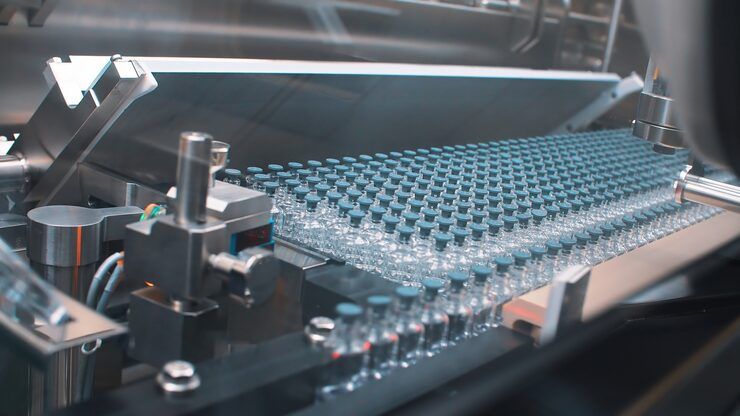
The process is useful because it can produce shapes ranging from simple shallow trays to large, contoured panels. The final product depends on several factors, including the type of plastic, sheet thickness, mould design, heating method, forming pressure, and cooling time.
Unlike injection moulding, which forces molten plastic into a closed mould, thermoforming usually starts with a prepared sheet. This difference influences the types of products each process can create, the tooling requirements, and the amount of material that may remain after trimming.
Thermoforming machines vary in size and complexity. Some are compact systems designed for smaller production runs, while others use automated sheet feeding, heating, forming, cutting, and stacking equipment. Understanding these systems helps explain how everyday plastic products are manufactured.
Importance of Plastic Thermoforming Machines
Plastic thermoforming machines play an important role in modern manufacturing because they can shape plastic sheets into products with specific dimensions, surface features, and functional characteristics. Their importance extends across industries that require lightweight components, protective packaging, and consistent product shapes.
Applications in Packaging
Packaging is one of the major uses of thermoforming. The process creates trays, clamshell containers, lids, blisters, and compartments that hold products in place during storage and transportation.
Food packaging is a familiar example. Plastic trays may separate different food items, while clear lids allow consumers to view the contents. In pharmaceutical packaging, thermoformed cavities can hold tablets or capsules in organised positions, depending on the packaging design and regulatory requirements.
Packaging applications require attention to material suitability, hygiene, thickness, sealing performance, and resistance to damage. Products intended for direct food or pharmaceutical contact must use materials and manufacturing processes appropriate for that purpose.
Use in Automotive and Industrial Manufacturing
Automotive manufacturers use thermoformed plastics for selected interior panels, trim components, protective covers, and other shaped parts. The process can create curved surfaces and complex contours that would be difficult to produce from flat sheets alone.
Industrial equipment may also include thermoformed covers, machine guards, equipment housings, and protective liners. The suitability of a component depends on its required strength, temperature resistance, impact performance, and operating environment.
Production Efficiency and Design Flexibility
Thermoforming allows manufacturers to create a wide range of shapes using different mould designs. A change in mould geometry can adapt the process to another product, although new tooling, testing, and machine adjustments may be necessary.
Automation can coordinate sheet movement, heating, forming, trimming, and product stacking. This can reduce repetitive manual handling and help maintain consistent production conditions. Actual output depends on the machine layout, material properties, product dimensions, and cycle time.
Material Utilisation and Waste Management
Plastic sheet is shaped into a product, and excess material may be removed during trimming. The quantity of offcuts depends on the product layout, mould arrangement, sheet dimensions, and forming method.
Some clean production scrap can be collected and reprocessed where the material type, contamination level, and product requirements permit. However, not all scrap is suitable for reuse, especially when different polymers, coatings, inks, or contaminants are mixed together.
Careful sheet layout, accurate temperature control, and suitable mould design can help reduce defects and material waste.
Types of Plastic Thermoforming Machines
Thermoforming systems are often classified by how they shape the heated sheet and how much automation they include. The appropriate type depends on product geometry, required detail, production volume, and material characteristics.
Vacuum Thermoforming Machines
Vacuum thermoforming uses suction to pull a heated plastic sheet against a mould. Air is removed from the space between the sheet and the mould, allowing atmospheric pressure to press the softened material into the mould's shape.
This method is commonly used for packaging trays, protective inserts, equipment covers, and large plastic panels. It is particularly suitable for products with relatively straightforward shapes.
The level of detail depends on the vacuum system, mould design, sheet temperature, and material thickness. Deep shapes may produce uneven wall thickness if the process is not properly controlled.
Pressure Thermoforming Machines
Pressure thermoforming uses compressed air to push the heated sheet against the mould. In many systems, pressure is applied in addition to vacuum, helping the sheet reproduce finer surface features.
This method can be useful for products with detailed textures, sharper edges, or more complex surface geometry. It is used in selected packaging applications, appliance components, and decorative plastic parts.
Pressure levels, heating conditions, and mould construction must be matched to the material and product design. Excessive pressure or unsuitable temperatures can cause defects rather than improve detail.
Mechanical Thermoforming Machines
Mechanical forming systems use physical movement, such as a plug assist, to help stretch the heated sheet into a mould. The plug guides material into deeper sections before or during vacuum or pressure forming.
Plug-assisted forming can improve material distribution in certain deep containers and trays. It is not a separate replacement for every vacuum or pressure process; instead, it is often combined with them to achieve the desired shape and wall thickness.
Automatic and Semi-Automatic Machines
Thermoforming machines also differ in their level of automation.
- Manual systems: Operators perform many loading, unloading, or handling tasks.
- Semi-automatic systems: Heating and forming may be mechanised, while some handling tasks remain manual.
- Fully automatic systems: Integrated equipment may handle sheet feeding, heating, forming, cutting, stacking, and conveying.
Automation can improve repeatability, but it also requires suitable controls, maintenance, operator training, and safety procedures. The production setup should match the product and the level of consistency required.
The thermoforming process involves several connected stages. Each stage affects the final product's shape, strength, appearance, and dimensional accuracy.
Heating the Plastic Sheet
A plastic sheet is fed into the machine and heated using electric heaters, infrared elements, or another suitable heating system. The objective is to soften the sheet evenly without overheating or degrading the polymer.
Different plastics require different temperature ranges. Polypropylene, polystyrene, polyethylene terephthalate (PET), and acrylonitrile butadiene styrene (ABS) have different forming characteristics. The machine's heating controls must match the material being processed.
Forming the Sheet
Once the sheet reaches a suitable forming temperature, it is moved over or into the mould. Vacuum, compressed air, mechanical assistance, or a combination of methods shapes the material.
The mould determines the product's basic geometry. Its surface finish, depth, edges, and ventilation arrangements can influence the final appearance and how evenly the plastic stretches.
Cooling and Trimming
After forming, the plastic is cooled until it can maintain its shape. Cooling may use air, contact with a cooled mould, or other controlled methods.
The formed part is then separated from excess sheet material through trimming or cutting. Depending on the machine, this stage may occur in an integrated station or on separate equipment. Finished products can subsequently be inspected, stacked, packed, or moved to another manufacturing stage.
Quality Inspection
Inspection checks whether the product meets its dimensional and functional requirements. Common checks include wall thickness, surface appearance, edge quality, cracks, deformation, and consistency between production cycles.
For food and pharmaceutical packaging, additional requirements may apply to material composition, cleanliness, sealing performance, and traceability. Inspection methods should reflect the intended application.
Recent Updates and Developments in Plastic Thermoforming Machines
Developments in thermoforming focus on automation, improved process control, material efficiency, and the use of recycled plastics where technically suitable.
Automation and Digital Process Monitoring
Modern systems can coordinate sheet feeding, temperature control, forming, trimming, and product stacking. Sensors and programmable controls help operators monitor process conditions and identify deviations.
Automation can also support faster changeovers between moulds and product formats. However, the results depend on machine design, operator training, maintenance, and the characteristics of the material.
Industry reporting has highlighted the growing role of automation and process monitoring in thermoforming, particularly in packaging production. <Cite refs={["turn993827search5"]}/>
Recycled Plastic and Material Efficiency
Manufacturers are paying greater attention to recycled plastic content and the management of production scrap. Recycled PET, for example, can be used in certain thermoformed packaging applications when the material meets the necessary quality and regulatory requirements.
The use of recycled material requires careful control of contamination, colour, consistency, and thermal properties. Food-contact applications may face additional restrictions, so recycled content cannot be assumed suitable for every product.
Reducing excess sheet material and improving the layout of formed parts can also help lower waste generation. Where practical, clean offcuts can be segregated by polymer type for suitable recovery routes.
Energy and Temperature Control
Heating is a major part of thermoforming, so machine design increasingly emphasises controlled heat distribution and efficient operation. Zoned heating allows different sections of the sheet to receive different amounts of heat, which can be useful for products with deep or uneven shapes.
Better temperature control may reduce defects such as webbing, thinning, incomplete forming, and surface distortion. Actual energy performance varies according to the equipment, material, product design, and operating conditions.
Regulatory Developments in India
India's plastic-waste framework continues to evolve. The Plastic Waste Management Rules, 2016, have been amended several times, including amendments published in 2025 and 2026. The Central Pollution Control Board maintains official information on these rules and related implementation resources.
The CPCB's plastic-packaging Extended Producer Responsibility portal also announced that its former portal ceased operations on 28 June 2026, with data migrated to a new Common EPR Portal. Stakeholders should consult the current official portal for applicable registration and reporting information.
These changes are relevant to businesses involved in plastic packaging and waste management, although the obligations applicable to a particular operator depend on its role and the current rules.
Laws or Policies Related to Plastic Thermoforming Machines in India
Plastic thermoforming machines are not governed by one single law covering every aspect of their operation. Applicable requirements may involve environmental permissions, plastic-waste rules, workplace safety, electrical safety, and product-specific standards.
Plastic Waste Management Rules
The Plastic Waste Management Rules, 2016, as amended, establish requirements relating to plastic waste management in India. Depending on the organisation's role, the framework may involve waste handling, registration, reporting, or Extended Producer Responsibility (EPR) obligations.
A manufacturer using thermoforming equipment should identify whether it acts as a plastic packaging producer, a packaging manufacturer, a brand owner, or another regulated stakeholder. The applicable obligations can differ according to these classifications.
Restrictions on Certain Single-Use Plastic Items
India introduced restrictions on identified single-use plastic items from 1 July 2022 under amendments to the plastic-waste rules. The restrictions apply to specified items rather than every product made from plastic.
Consequently, the legality of a thermoformed item depends on what it is, its intended use, and the rules currently applicable to that category. Manufacturers should verify the status of a proposed product instead of assuming that every disposable plastic item is permitted or prohibited.
Environmental and Factory Requirements
Industrial units may need permissions or consents from the relevant State Pollution Control Board or Pollution Control Committee, depending on the activity, location, and applicable classification. Requirements may also apply to emissions, waste storage, water use, and disposal practices.
Factories and machine operators must also consider applicable workplace safety requirements. Guards, emergency stops, electrical protection, suitable ventilation, and training can help reduce hazards associated with heated surfaces, moving parts, and cutting equipment.
Because requirements vary by location and industrial activity, operators should confirm current obligations with the relevant authorities before establishing or modifying a production facility.
Tools and Resources for Plastic Thermoforming Machines
Several technical resources can help manufacturers understand machine operation, material selection, maintenance, and product quality.
Machine Manuals and Technical Data Sheets
The machine manual provides information about operating limits, heater settings, mould installation, maintenance schedules, and safety procedures. Material data sheets describe characteristics such as forming behaviour, recommended processing conditions, and chemical resistance.
Operators should use information appropriate to the exact machine model and polymer grade. Temperature settings from one material or machine should not automatically be transferred to another.
CAD and Mould-Design Software
Computer-aided design (CAD) tools help engineers develop product geometry, mould layouts, and dimensional drawings. Some engineering tools also support simulation of sheet stretching and thickness distribution.
These resources are useful when designing deep containers, curved panels, and products with complex contours. Prototype testing remains important because simulated results may not capture every real-world production condition.
Quality-Control Instruments
Common inspection tools include callipers, thickness gauges, weighing scales, temperature sensors, and visual inspection equipment. More specialised systems may measure surface profiles, dimensional tolerances, or material characteristics.
A suitable inspection plan identifies which dimensions and product features must be checked, how frequently checks should occur, and what action is needed when a defect is detected.
Maintenance and Operator Training
Routine maintenance may include heater inspection, vacuum-system checks, cleaning, lubrication of suitable moving components, and inspection of cutting tools. The exact schedule should follow the machine manufacturer's instructions and the conditions in which the equipment operates.
Training should cover safe mould changes, handling of heated sheets, emergency procedures, fault identification, and proper shutdown. Electrical or mechanical repairs should be carried out by appropriately qualified personnel.
Frequently Asked Questions About Plastic Thermoforming Machines
What is a plastic thermoforming machine used for?
It shapes heated plastic sheets into products such as food trays, packaging inserts, lids, protective covers, appliance components, and automotive panels. The specific applications depend on the machine, mould, and plastic material.
What materials can plastic thermoforming machines process?
Common materials include PET, polystyrene, polypropylene, polyethylene, and ABS. Not every machine can process every polymer equally well. Material selection depends on forming temperature, flexibility, strength, chemical resistance, and the product's intended use.
What is the difference between vacuum and pressure thermoforming?
Vacuum thermoforming uses suction to draw softened plastic against a mould. Pressure thermoforming applies compressed air to push the sheet into the mould, often allowing finer surface details. The suitable method depends on product geometry and the required level of detail.
How does automation improve thermoforming?
Automation can coordinate feeding, heating, forming, trimming, and stacking. Sensors and programmable controls help maintain consistent conditions and identify deviations. The actual improvement depends on the production setup, equipment capability, and maintenance quality.
How can plastic thermoforming waste be reduced?
Waste can be reduced through accurate sheet layout, controlled heating, suitable mould design, consistent machine settings, and careful quality inspection. Clean offcuts may be recovered when the polymer and intended recycling route permit it. Contaminated or mixed materials require appropriate handling.
Conclusion
Plastic thermoforming machines transform heated thermoplastic sheets into products used in packaging, transportation, household goods, and industrial manufacturing. Vacuum, pressure, and mechanically assisted methods provide different ways to shape materials according to the product's design. Automation, improved temperature control, and material recovery are important areas of development, while safety and regulatory compliance remain essential. Understanding the machine type, plastic properties, mould design, and applicable Indian rules helps manufacturers make informed technical decisions.